Daijiworld Media Network - Tehran
Tehran, Jun 7: Pakistan Interior Minister Mohsin Naqvi has travelled to Iran carrying a “special letter” for Iran’s Supreme Leader Mojtaba Khamenei as diplomatic efforts continue to end the ongoing conflict involving Iran, the United States and Israel.
Naqvi arrived in Tehran late on Saturday and met Iranian Interior Minister Eskandar Momeni. According to Naqvi, the two leaders discussed regional developments and internal security issues during their meeting.
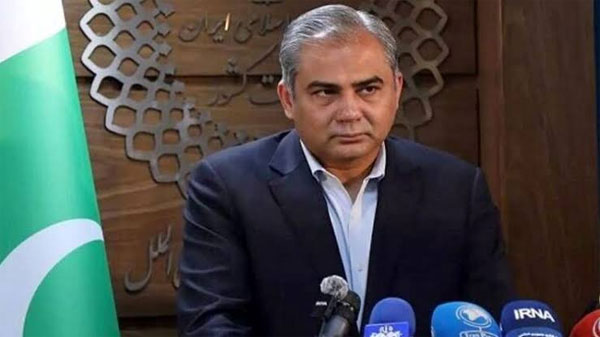
Prior to his arrival, Iranian media reported that Naqvi was carrying a message from Pakistan’s Prime Minister and Army Chief for the Iranian leadership.
The visit comes amid renewed tensions in the Gulf region. The US Central Command (CENTCOM) said on Sunday that its forces had shot down two Iranian one-way attack drones that it claimed posed a threat to international maritime traffic in the Strait of Hormuz.
Earlier, US forces reported intercepting ballistic missiles allegedly heading towards Kuwait and Bahrain and said they had also targeted Iranian coastal surveillance radar installations in Garuk and on Qeshm Island to prevent further maritime attacks.
The developments have drawn strong reactions from Gulf nations. Bahrain condemned the attacks as “blatant aggression”, while Kuwait described them as a dangerous escalation. Egypt, Jordan and Qatar also voiced concern over the situation.
Despite periodic military exchanges, diplomatic negotiations aimed at ending the conflict are continuing. However, significant differences remain between the parties involved.
US President Donald Trump recently expressed hope that an agreement could be reached soon, while also warning of the possibility of renewed military action if talks fail.
Iranian officials have adopted a more cautious stance. Mohsen Rezaei, a senior adviser to Iran’s supreme leader, said negotiations had reached a deadlock and called for the release of approximately $24 billion in frozen Iranian assets.
The issue of frozen Iranian assets remains one of the key sticking points in the negotiations. Reports indicate that the US Treasury is considering mechanisms to utilise some Iranian assets for reconstruction efforts in Gulf countries affected by the conflict.
Other unresolved issues include sanctions relief on Iranian crude exports, lifting restrictions on Iranian ports, security arrangements in the Strait of Hormuz and broader regional ceasefire demands, including developments in Lebanon.
The Strait of Hormuz, through which nearly one-fifth of globally traded oil normally passes, remains at the centre of the crisis. Disruptions to maritime traffic have contributed to higher global energy prices and concerns over supply security.
Although a Pakistan-mediated ceasefire initiated in April helped reduce direct hostilities, negotiations have yet to produce a comprehensive settlement, and repeated flare-ups have heightened fears of a wider regional conflict.