Daijiworld Media Network - Jamshedpur
Jamshedpur, Jun 28: A cerebral malaria outbreak in Jharkhand's East Singhbhum district has claimed the lives of three children within the last 48 hours, triggering an intensive health response as authorities race to contain the spread of the disease in the Potka block.
Officials said the outbreak has created a serious public health concern, with fresh infections continuing to emerge from several villages. More than 20 patients, many of them children, are currently undergoing treatment at Mahatma Gandhi Memorial (MGM) Medical College and Hospital in Jamshedpur, where several are reported to be in critical condition.
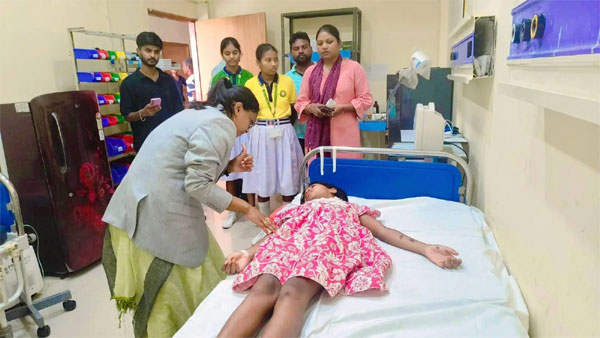
In response to the worsening situation, the district health department has launched an extensive surveillance and screening campaign across nine affected villages in Potka, alongside measures to strengthen medical care and disease control.
District Surveillance Officer Dr Asad said the onset of the monsoon has led to an unexpected rise in malaria and cerebral malaria cases across the region. He confirmed that three children had died due to the infection.
The deceased have been identified as Lakhkhi Sardar, a Class VII student of PM Shri Kasturba Gandhi Residential School, Rahul Sardar (8) of Daudrodia village, and Subola Sardar (8) of Kandar village.
Health officials said Subola's one-year-old sister, Khushboo Sardar, has also been infected with cerebral malaria and remains on ventilator support in the Paediatric Intensive Care Unit (PICU) of MGM Hospital.
During special screening drives conducted in the affected villages, medical teams detected more than 14 fresh malaria cases. The newly identified patients include three students from the Kasturba Gandhi Residential School and a nine-month-old infant from the Sabar tribal community.
Authorities said over 600 residents have so far been screened through medical camps set up as part of the emergency response.
Amid the outbreak, the district administration has sealed a private clinic in Potka after allegations of negligence in the treatment of Lakhkhi Sardar. Preliminary investigations reportedly found that despite exhibiting symptoms consistent with cerebral malaria, the child did not receive appropriate medical treatment. A show-cause notice has also been served on the clinic operator.
A senior health department team visited the Potka Community Health Centre to assess the situation and expressed concern over shortages of essential resources. Officials have directed the immediate supply of additional spray pumps, rapid diagnostic test (RDT) kits and life-saving medicines to strengthen the local response.
The health department has simultaneously launched a mass fever survey, door-to-door health screening and mosquito control measures across the affected villages to identify infections early and curb further transmission.
Medical experts have urged residents to seek immediate treatment if they experience symptoms such as persistent high fever, chills, severe headache, vomiting, seizures or loss of consciousness, warning that cerebral malaria can become life-threatening if treatment is delayed.
As part of preventive measures, health authorities have advised people to sleep under mosquito nets, wear full-sleeved clothing to minimise mosquito bites and eliminate stagnant water around homes to reduce mosquito breeding.