Daijiworld Media Network - Chandigarh
Chandigarh, Jul 4: A two-storey building collapsed in Chandigarh's Industrial Area Phase-2 on Saturday evening, leaving two people feared trapped beneath the debris, while five others were rescued in an ongoing multi-agency rescue operation.
The incident marks the second building collapse in Chandigarh within 24 hours, raising fresh concerns over the structural safety of ageing buildings in the city.
According to Sub-Divisional Police Officer (South) Gurjit Kaur, rescue teams are continuing operations to locate and safely extricate the two individuals believed to be trapped under the rubble.
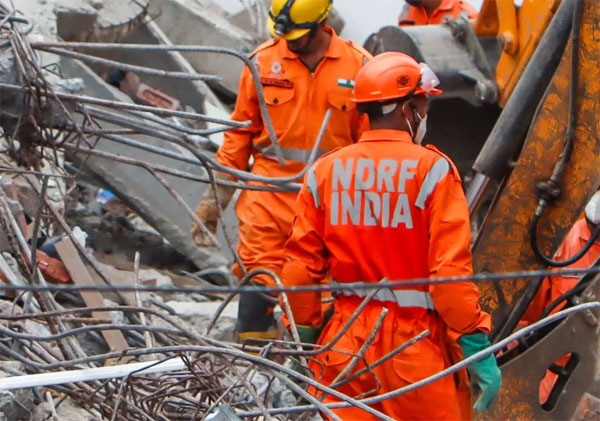
Officials said the collapsed structure was being used by a scrap dealer.
Personnel from the fire and emergency services rushed to the site immediately after receiving information about the collapse and launched a coordinated rescue effort along with the police, municipal authorities and the National Disaster Response Force.
Sniffer dogs have also been deployed to assist in locating survivors beneath the debris, while ambulances have been stationed at the site to provide immediate medical assistance to those rescued.
The incident comes a day after the roof of the auditorium at Chandigarh College of Engineering and Technology in Sector 26 collapsed. No casualties were reported in that incident as the auditorium was unoccupied at the time.
The auditorium, which serves as a designated vote-counting centre during elections, had earlier been declared unsafe following a structural assessment by the Engineering Department.
After conducting a detailed structural safety audit, the department had sought further technical advice from Punjab Engineering College regarding the stability of the building. Demolition of the unsafe structure had already begun before the roof collapse occurred.
The two incidents have heightened concerns among residents and business owners, many of whom have expressed apprehension over the condition of several decades-old buildings in the city, citing inadequate maintenance and the absence of regular structural safety audits.