Media Release
Mangaluru, Jul 17: The department of computer science and engineering at Yenepoya School of Engineering & Technology (Yenepoya Deemed to be University) successfully concluded a five-day hybrid hands-on Faculty Development Programme (FDP) on 'Emerging research trends in computer science: AI and quantum technologies' from July 6–10, reaffirming the institution's commitment to advancing research, innovation, and academic excellence.
Conducted in the robotics laboratory at the Balmatta campus and streamed online, the programme brought together 98 participants comprising faculty members, research scholars, students, and industry professionals from seven Indian states, creating a vibrant platform for interdisciplinary learning and collaboration.
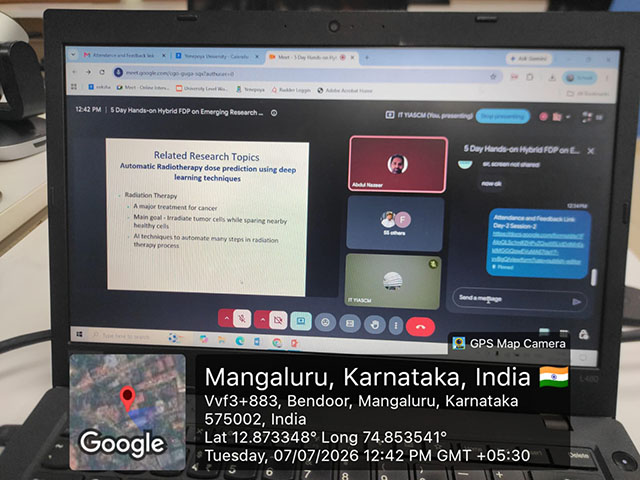
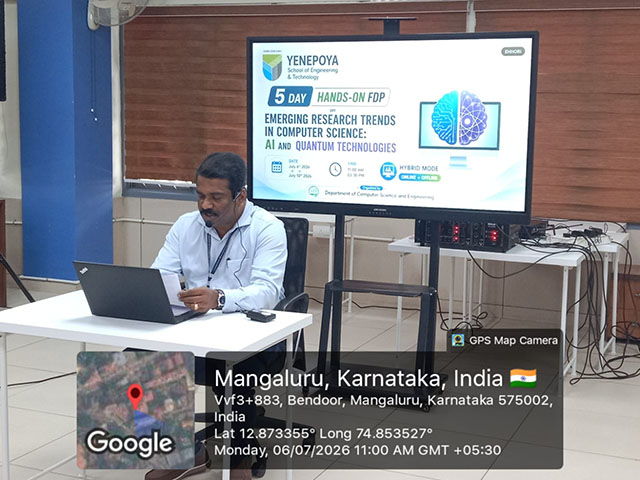
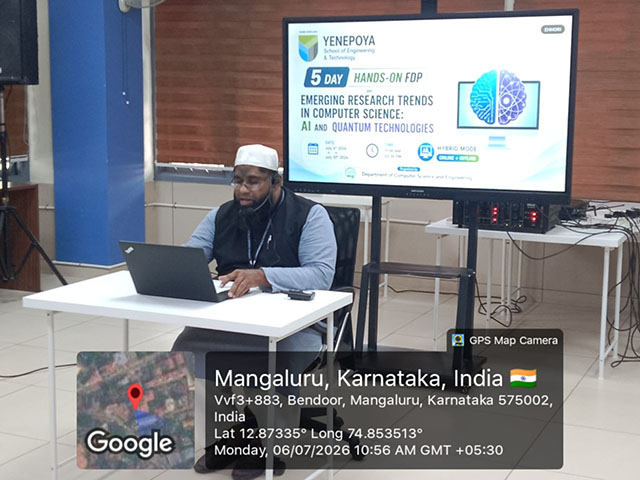
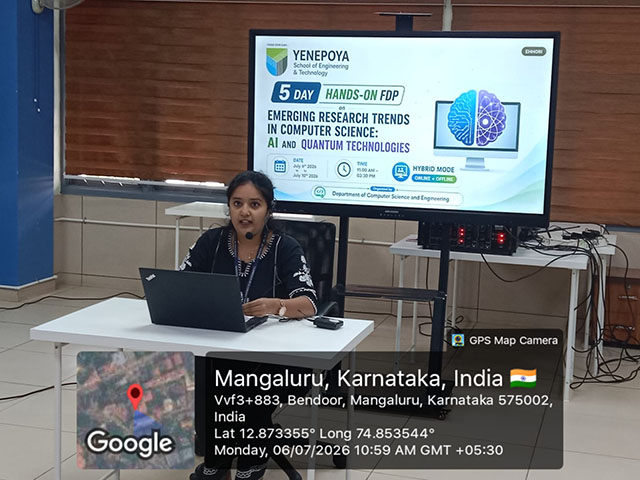
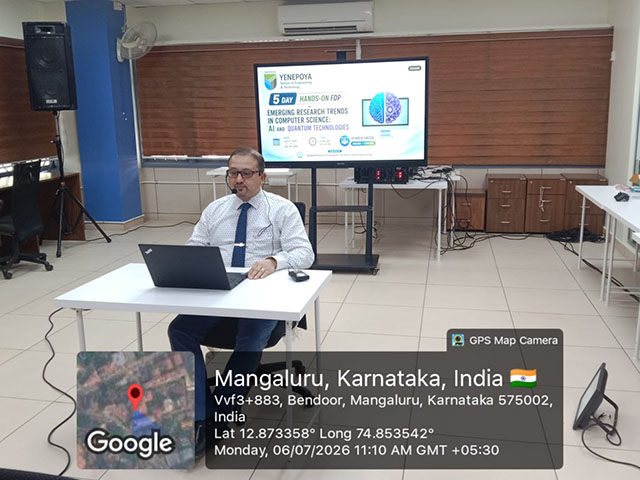
The programme was inaugurated by Dr Aswini Dutt R, registrar, Yenepoya (Deemed to be University), who highlighted the transformative role of emerging technologies and interdisciplinary research in shaping the future of higher education. The inaugural session was presided over by Dr Rajesh Gratian D'Souza, dean, faculty of engineering & technology, while Dr Prabhakara B K, professor and head, department of computer science & engineering, welcomed the gathering and outlined the vision behind the initiative.
Designed to bridge the gap between cutting-edge research and practical application, the FDP featured an impressive line-up of experts from premier institutions including NIT Calicut, NITK Surathkal, IIT Palakkad Technology IHub Foundation (TiF), NIT Tiruchirappalli, Wiley, and leading AI start-ups. Participants engaged in expert lectures and immersive hands-on sessions covering contemporary themes such as Generative AI, Large Language Models (LLMs), Diffusion Models, AI-assisted research productivity, AI in Healthcare, Quantum Computing, Quantum Algorithms using Qiskit, AI-powered Cybersecurity, and scholarly publishing strategies.
One of the programme's defining strengths was its emphasis on experiential learning. Live demonstrations, interactive coding sessions, and practical workshops enabled participants to explore real-world applications of Artificial Intelligence and Quantum Technologies while gaining valuable insights into research methodologies, scientific writing, and publication practices.
The overwhelming response to the FDP reflected its national appeal. Through an extensive outreach campaign involving professional networks and direct communication with nearly 5,000 faculty members across India, the programme attracted participants from Karnataka, Kerala, Tamil Nadu, Uttar Pradesh, Haryana, Meghalaya, and West Bengal, significantly expanding its academic footprint.
Aligned with the objectives of the National Education Policy (NEP) 2020, National Quantum Mission, Digital India, and Atmanirbhar Bharat, the programme promoted multidisciplinary research, industry-academia collaboration, and capacity building in frontier technologies. It also contributed towards multiple United Nations Sustainable Development Goals by strengthening quality education, innovation, partnerships, and professional competencies.
The successful completion of the FDP marks another significant milestone for Yenepoya School of Engineering & Technology in nurturing a vibrant research ecosystem. By equipping educators, researchers, and aspiring innovators with future-ready knowledge and practical skills, the university continues to position itself as a hub for emerging technologies and research-driven education.
As Artificial Intelligence and Quantum Computing continue to redefine the global technological landscape, initiatives such as this FDP ensure that the academic community remains at the forefront of innovation ready not only to adapt to the future but to actively shape it.