Daijiworld Media Network - Kinshasa
Kinshasa, Jul 25: The Ebola outbreak in the Democratic Republic of the Congo (DRC) continues to worsen, with confirmed infections rising to 2,973 and the death toll reaching 1,309, prompting the government to intensify its response amid fears of a deepening humanitarian crisis.
Prime Minister Judith Suminwa Tuluka, during a visit to Bunia in Ituri Province—the epicentre of the outbreak—said on Friday that the government has allocated $50 million to combat the epidemic, supplemented by financial support from international partners.
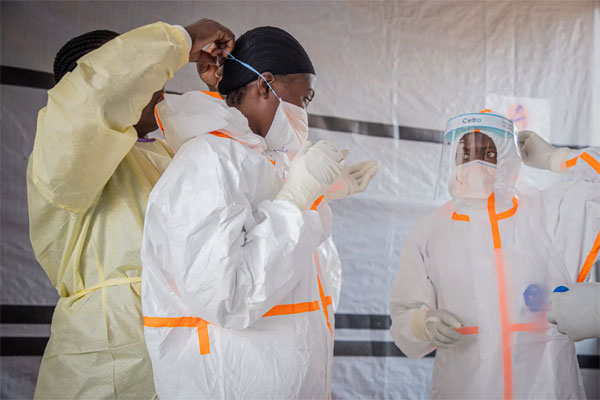
She stressed the urgent need to strengthen logistics in affected regions, saying medical supplies and essential infrastructure must reach outbreak zones without delay.
According to the Prime Minister, priority requirements include laboratory equipment, ambulances, oxygen supplies, clean water, hygiene materials, and resources for conducting safe and dignified burials.
Suminwa also urged authorities to tighten disease surveillance in camps for displaced people, warning that unchecked transmission could further worsen the already fragile humanitarian situation in Ituri and neighbouring eastern provinces.
The latest health bulletin released by Congolese authorities on Saturday reported that 540 patients have recovered since the outbreak began, while 766 infected individuals remain under isolation or hospital care.
Health officials said the outbreak continues to witness sustained community transmission, with the virus still circulating at a high level. They cautioned that fluctuations in daily case numbers should be interpreted carefully because of reporting delays and the ongoing verification of epidemiological data.
The epidemic has also taken a heavy toll on healthcare personnel. So far, 123 health workers and frontline responders have contracted the virus, with 36 fatalities reported among them.
The Prime Minister said researchers are working to develop both a vaccine and an effective treatment for the Bundibugyo ebolavirus, the strain responsible for the current outbreak. She expressed optimism that experimental medical solutions could become available within the next two to four months, adding that the government has financially supported the research efforts.
At present, there is no approved vaccine or licensed treatment specifically targeting the Bundibugyo strain, although several experimental vaccines and therapies are undergoing clinical evaluation.
In a significant development, the University of Oxford announced on Friday that the first participant has received a dose in the world's first human clinical trial of the ChAdOx1 BDBV vaccine, which has been developed specifically against the Bundibugyo ebolavirus.
The current Ebola outbreak, officially declared on May 15, has spread beyond Ituri to North Kivu, South Kivu, Haut-Uele and Tshopo provinces, making it one of the country's most serious public health emergencies in recent years.