Daijiworld Media Network - Dhaka
Dhaka, Jul 26: Bangladesh's measles outbreak continues to pose a serious public health challenge, with four more children dying from suspected measles-related complications in the 24 hours ending 8 a.m. (local time) on Sunday, taking the combined total of confirmed and suspected fatalities to 820.
According to the Directorate General of Health Services (DGHS), the latest deaths have been classified as suspected measles fatalities. As a result, the number of suspected deaths has risen to 725, while the tally of laboratory-confirmed deaths remains unchanged at 95, local media reported.
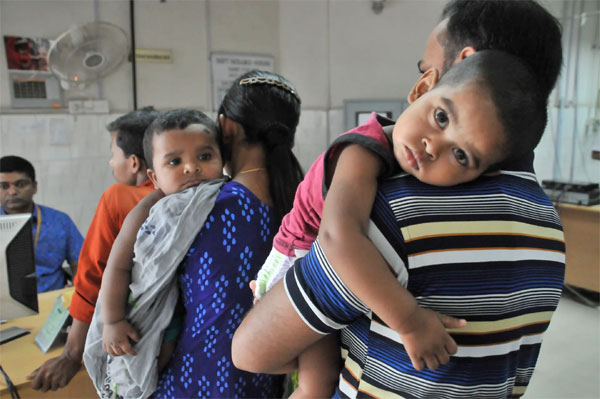
The country also recorded 990 new suspected measles cases during the same period, pushing the cumulative number of suspected infections to 123,753.
Health authorities further confirmed 170 new laboratory-verified cases, raising the total number of confirmed measles infections to 15,442.
Since March 15, a total of 106,239 people with suspected measles have been admitted to hospitals across Bangladesh. Of these, 102,467 patients have recovered, according to official DGHS data.
Despite government efforts to control the outbreak through an emergency vaccination campaign, the disease continues to spread at an alarming rate. Reports indicate that, on average, nearly four children are dying every day, while more than 800 patients are being hospitalised daily due to measles.
Although the government has stated that it exceeded its emergency vaccination targets, hospitals continue to receive large numbers of unvaccinated patients, raising concerns about gaps in immunisation coverage.
The outbreak remained severe during the first three weeks of July, with health authorities recording an average of 1,005 suspected and confirmed cases, 821 hospital admissions, and almost four deaths each day.
Mahmudur Rahman, Chairman of Bangladesh's National Verification Committee for Measles and Rubella Elimination, said the decline in cases has been slower than expected despite the vaccination drive.
He noted that the authorities appear to have underestimated the scale of the challenge even two months after the emergency immunisation campaign began.
Public health experts have attributed the prolonged outbreak to several factors, including significant gaps in vaccination coverage, infections among children who fell outside the campaign's target age group, and inadequate infection prevention and control measures.
Rahman said an estimated 40 lakh children remain vulnerable because of a large gap between the coverage of the measles-rubella vaccination campaign and the Vitamin A supplementation programme.
Describing the gap as "astonishing," public health expert and former DGHS disease control director Be-Nazir Ahmed said it reflected shortcomings in planning and target-setting for the vaccination campaign.
He added that insufficient public awareness and limited outreach meant many families were unaware of the revised vaccination schedule, contributing to the continued spread of the disease across the country.