Daijiworld Media Network - New Delhi
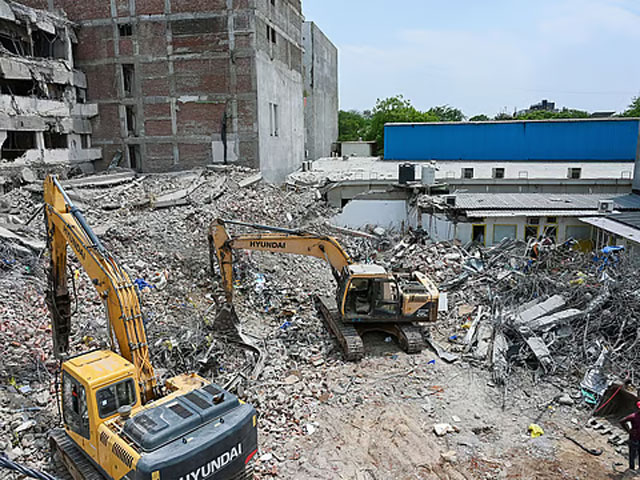
New Delhi, Jul 28: A magisterial inquiry ordered by the Delhi government has held the Municipal Corporation of Delhi (MCD) primarily responsible for the building collapse in Saket on May 30 that claimed six lives, accusing the civic body of fabricating records to mislead the investigation and conceal administrative lapses.
The report, submitted by the South district magistrate to the Delhi chief secretary, concluded that the tragedy was preventable and attributed it to the MCD's failure to enforce building regulations and take timely action against illegal construction.
According to the inquiry, the multi-storey commercial building near Saket Metro station collapsed due to unauthorised structural additions, including illegally constructed third and fourth floors, combined with inadequate regulatory oversight.
The report gave a clean chit to other agencies, including the Delhi Police and the Delhi Jal Board, stating that the MCD had failed to act on a complaint regarding illegal construction received on March 9.
It noted that there were no records of inspections, verification, demolition drives or any preventive measures taken for more than two months after the complaint.
The inquiry found that the illegal third and fourth floors were officially recorded only on May 27, although they had reportedly been constructed nearly three months before the collapse.
The report further alleged that MCD officials created "false and fabricated" documents after the incident, including a show-cause notice dated May 27 and a work-stop notice dated May 29, in an attempt to mislead the inquiry and create the impression that action had been taken before the collapse.
Rejecting the MCD's claim that excavation for an underground water tank had caused the building to collapse, the inquiry said the explanation lacked technical evidence and appeared to be based on assumptions rather than verified findings.
The report recommended fixing accountability for both field-level and supervisory officials. It also called for mandatory structural safety audits of old and unauthorised buildings, stricter enforcement of building regulations, multi-agency inspection teams, GIS-based mapping of vulnerable structures, digital monitoring of unsafe buildings, risk-based categorisation and the immediate demolition or evacuation of hazardous structures.