Daijiworld Media Network – New Haven
New Haven, Jul 29: A new study has found that the human heart possesses its own network of neurons capable of regulating heart activity independently, challenging the long-held belief that the organ functions solely under the brain's control.
The research, conducted by scientists at Yale University and published in the journal Cell in July 2026, suggests that a small network of nerve cells within the heart actively helps control heart rhythm and protects the organ during periods of physical and physiological stress.
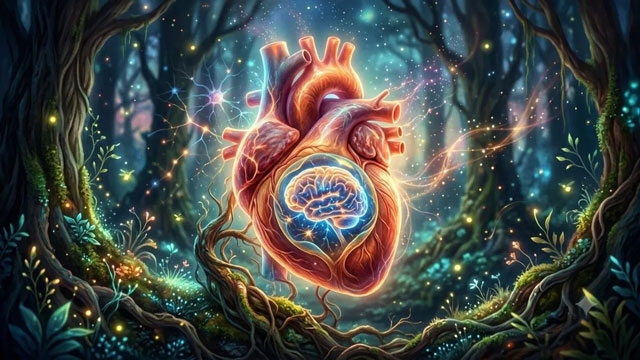
Researchers focused on the intrinsic cardiac nervous system, a network of neurons located in the fatty tissue surrounding the heart. Although these neurons account for only about 0.01 per cent of the cells in the tissue, they were found to function as a local control centre, communicating with one another while also receiving signals from the brain.
The study showed that this neural network does more than relay messages from the brain. Instead, it processes information locally and plays a direct role in regulating the heart's activity.
Using genetically modified mice, researchers identified two distinct groups of neurons, known as Npy+ and Ddah1+ neurons, each performing different functions in maintaining heart health.
The experiments revealed that Npy+ neurons are essential for controlling heart rate. Stimulating these cells slowed the heartbeat, while eliminating them caused heart failure and proved fatal in the test animals, indicating that they are vital for maintaining normal cardiac function.
The second group, Ddah1+ neurons, appeared to have little effect under normal conditions. However, further experiments showed they became critical when the body was exposed to physical or physiological stress. Mice lacking these neurons were unable to withstand stressful conditions, suggesting that the cells help protect the heart when it is required to work harder.
The researchers also found similar neuron subtypes in human heart tissue. However, they cautioned that the functional experiments were conducted only in mice, and further studies are needed to confirm whether the same mechanisms operate in humans.
If validated, the findings could significantly improve scientists' understanding of how the heart regulates its rhythm and responds to stress, potentially opening new avenues for the treatment of cardiovascular diseases.
The study concludes that the heart is not merely an organ responding to instructions from the brain but possesses its own small neural network capable of interpreting signals and adjusting its activity according to the body's needs.