Daijiworld Media Network - Kinshasa
Kinshasa, Aug 24: Confirmed Ebola cases in the Democratic Republic of the Congo (DRC) have crossed 5,500, with more than 2,600 deaths, according to government figures released on Monday, as the World Health Organisation (WHO) warned that the outbreak has reached a “defining moment” more than 100 days after it was declared.
The latest official tally, covering data through Saturday, recorded 5,514 confirmed cases and 2,642 deaths, putting the case fatality rate at 47.9 per cent. A total of 1,200 patients have recovered.
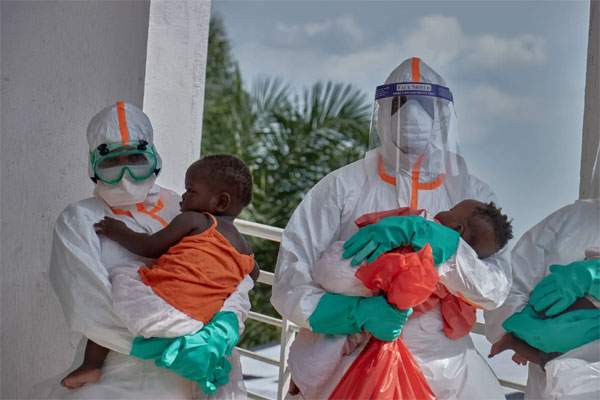
The outbreak has spread to 57 health zones across Ituri, North Kivu, South Kivu, Haut-Uele, Bas-Uele and Tshopo provinces, Xinhua News Agency reported.
The WHO said the epidemic has become the fastest-growing Ebola outbreak ever recorded in the DRC, with transmission continuing to outpace control efforts.
“This outbreak has reached a defining moment,” WHO Regional Director for Africa Mohamed Janabi said in a statement.
“The choices we make now will determine how quickly we can bring this outbreak under control, protect and save lives,” he added.
Ituri remains the epicentre of the outbreak, accounting for around 85 per cent of cases and 79 per cent of deaths, according to the WHO.
Deaths occurring outside Ebola treatment centres remain a major concern. The WHO said community deaths accounted for around 60 per cent of fatalities recorded in recent weeks, highlighting continuing challenges in early detection, referral and access to treatment.
The organisation said insecurity, recurring conflict, population displacement, attacks on health facilities, reluctance among some communities and difficult access were continuing to hamper response operations, particularly in eastern DRC.
“We can bring the Ebola outbreak under control but only through scaled-up action in affected communities,” WHO Director-General Tedros Adhanom Ghebreyesus said.
He called for sustained resources and stronger cooperation among national and local authorities, affected communities and international partners.
Response capacity has expanded significantly since the outbreak began. According to the WHO, the number of laboratories capable of testing for Ebola has increased from one to 19, with capacity to process more than 3,000 samples a day.
Treatment capacity has also expanded from fewer than 10 beds to more than 1,300 beds.
Clinical trials of potential treatments and evaluations of candidate vaccines are underway. The WHO also said the first emergency-listed molecular diagnostic test for Bundibugyo virus disease has been deployed.
The agency warned that the coming months would be critical for closing remaining gaps and slowing transmission. It also stressed that an end to fighting in affected areas would be essential to allow health teams to safely reach communities.
The outbreak, caused by the Bundibugyo ebolavirus, was declared by DRC authorities in May.