Daijiworld Media Network - London
London, Aug 27: A 48-year-old man in England has become the first patient to undergo live artificial intelligence-assisted brain surgery, with the technology helping surgeons remove a tumour while protecting his eyesight, University College London Hospitals (UCLH) announced on Thursday.
Rhys Hibbert, from Bedfordshire, was diagnosed with a brain tumour in December 2024 after collapsing during a walk and suffering a seizure. As his symptoms worsened, he decided to undergo surgery and volunteered to participate in a clinical research trial.
“If patients are not prepared to join research how can doctors ever learn and how can medicine ever progress?” Hibbert said.
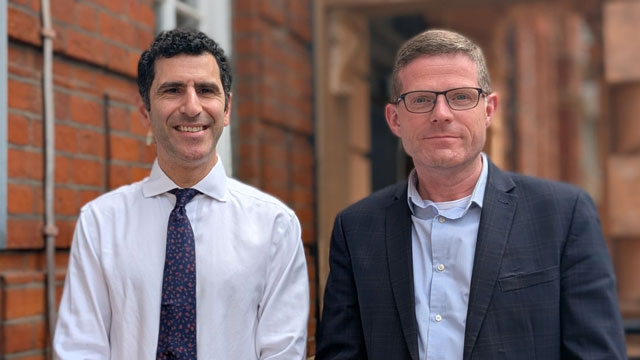
When asked whether he would agree to become the first patient to have the technology used during a live operation, he said, “yes, of course.”
Doctors said the tumour was threatening Hibbert's vision and could eventually have caused blindness. The operation successfully removed the growth while preserving his sight.
Hibbert said his vision had improved dramatically after the surgery. “When I came round… I could see everything in the room clearly,” he said.
The operation was performed at the National Hospital for Neurology and Neurosurgery (NHNN), part of UCLH, as part of a clinical trial involving AI technology developed in-house at University College London and funded by the National Institute for Health and Care Research (NIHR).
During the procedure, the AI system analysed a live video feed from the operation in real time rather than relying solely on scans taken before surgery. It helped the surgical team make more precise decisions by highlighting critical structures at the base of the brain, UCLH said.
The area contains the pituitary gland, which is about the size of a marble, surrounded by blood vessels and nerves responsible for controlling vision. Doctors said that an error of just one millimetre can have serious consequences, including blindness, stroke or death.
The AI technology helped surgeons identify areas that needed to be avoided while enabling them to remove as much of the tumour as safely as possible.
Researchers said the technology could also potentially track surgical instruments and their interactions with tissue, helping surgeons during complex procedures and providing real-time feedback.
UK Health Innovation Minister James Frith described the operation as an example of the potential of AI in healthcare.
“This is an example of AI at its best: patients getting care previously deemed unimaginable thanks to the latest groundbreaking technology,” Frith said.
However, he stressed that the use of AI in healthcare must be accompanied by appropriate safeguards.
“We will always ensure that safety is taken seriously,” he added.