Daijiworld Media Network - New Delhi
New Delhi, Aug 31: Kerala Grand Mufti Sheikh Abubakr Ahmad’s remarks that women should remain at home and stay away from public life have triggered a sharp debate, with Muslim Rashtriya Manch (MRM) leader Dr Shalini Ali strongly opposing the views and asserting that “India’s daughters need an open sky, not confinement”.
Calling the remarks highly objectionable and reflective of a regressive mindset, Dr Ali said women cannot be treated as possessions to be protected by restricting their freedom. She maintained that confining women in the name of dignity or security undermines their rights, aspirations and achievements.
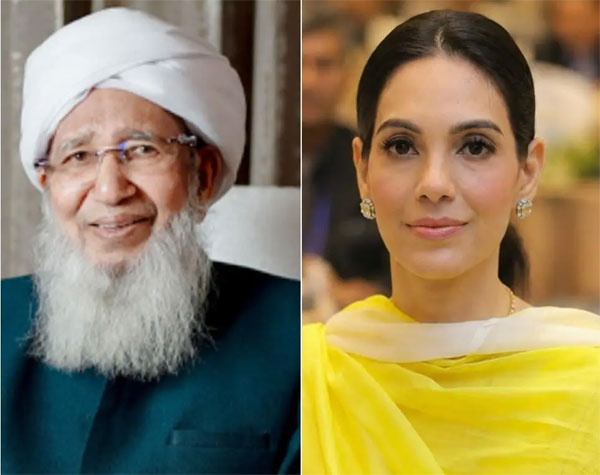
“A woman is neither a gold necklace nor a decorative object that can be locked away in a box. She is a free human being with dreams, talent, hard work and the right to make her own decisions,” she said.
According to Ali, keeping women confined within the four walls of their homes instead of educating and empowering them would push society backwards. She said true respect for women lies in recognising their capabilities and allowing them the freedom to choose their own paths.
The controversy erupted after the Grand Mufti said during a speech that women should remain within their homes and avoid public life, claiming that the Quran advocates such a position. He also defended the practice of purdah, saying it was intended to safeguard women’s dignity and security.
Seeking to clarify his remarks, the Grand Mufti said his intention was not to demean women but to ensure their protection and respect. However, an analogy he used during the speech became the focal point of the controversy.
To explain his position, he referred to a gold necklace displayed in a jewellery shop. According to him, a gold necklace is kept securely inside a cupboard, a box and protective packaging before being shown to customers, whereas a stone-grinding machine is often left by the roadside. He argued that if a gold necklace were left on the road, passers-by could touch it, affecting its beauty and value.
Using the analogy, he suggested that bringing women into public life could result in “great destruction” and described purdah as a system designed to prevent such consequences.
The comparison drew criticism from several quarters, with opponents questioning why women should be likened to inanimate objects. Critics argued that while jewellery can be owned and stored, women are autonomous individuals with constitutional rights and independent identities.
Dr Ali said the analogy itself reflected the problem with such thinking.
“A woman is not anyone’s property. She is the owner of her own life. Her education, career, public participation and right to make decisions cannot be curtailed in the name of protection,” she said.
She pointed out that contemporary India has moved far beyond the notion that a woman’s role is limited to home and family. Women today serve as fighter pilots, scientists, doctors, engineers, judges, journalists, entrepreneurs and sportspersons, contributing extensively to nation-building across sectors.
“They are defending the nation’s borders, conducting scientific research, treating patients, shaping public discourse and representing India globally. Restricting women to the home is not merely limiting their aspirations; it is restricting the potential of half the country’s population,” she said.
Highlighting the growing role of women in national life, Ali noted that Indian women now serve in all three branches of the armed forces and have made significant achievements in science, medicine, engineering, economics, education, aviation and sports.
“A woman who can defend the nation is fully capable of making decisions about her own future. Women must not be viewed as weak. Their abilities should be trusted and respected,” she added.
In his speech, the Grand Mufti also argued that religious scholars had promoted similar views for generations and that such teachings had helped preserve women’s dignity. Defending his right to express these opinions, he said religious scholars had a responsibility to speak on matters of faith and indicated that he would continue to do so despite criticism.
He further referred to Islamic history, saying Islam had ended practices such as female infanticide and granted women rights related to property and inheritance. According to him, restrictions on women’s public participation should be viewed as measures intended to ensure respect and protection rather than discrimination.
However, Dr Ali and the Muslim Rashtriya Manch rejected that interpretation, contending that dignity cannot be equated with confinement.
The organisation maintained that if a woman chooses to focus on her home and family, that is her right, but if she wishes to join the armed forces, become a doctor, pursue journalism, run a business or participate actively in public life, that choice must also be respected.
“The decision must belong to the woman herself. No one else has the authority to decide the course of her life on her behalf,” the organisation said.