Daijiworld Media Network - Kyiv
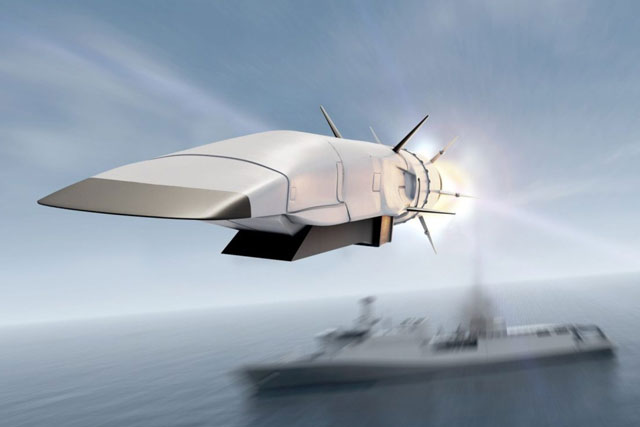
Kyiv, Sep 1: Ukrainian military intelligence has identified US-origin electronic components inside Russia's 3M22 Zircon missile and released a detailed assessment of the weapon's production chain, raising fresh questions over Moscow's continued access to Western technology despite sanctions and export controls.
The Main Directorate of Intelligence of Ukraine (GUR) published an interactive 3D model and component-level analysis of the Zircon missile on its War & Sanctions portal. According to the assessment, the missile's production network involves 70 companies and 84 individuals associated with its guidance, propulsion, warhead, onboard computer and other systems.
US-based defence publication The War Zone (TWZ) reported that the Ukrainian assessment identifies US-origin electronics inside the missile. Among the components are a high-power radio-frequency amplifier associated with TriQuint Semiconductor, which is now part of Qorvo, and a programmable semiconductor manufactured by Altera, now owned by Intel.
GUR has listed both components as originating in the United States. However, the identification of US-made components does not establish that the companies concerned knowingly supplied technology to Russia's defence industry.
TWZ noted that the Ukrainian assessment does not explain how the components ultimately reached Russian production lines. GUR has said it is continuing to investigate their origins and the supply chains through which they reached Russia.
The findings have renewed concerns over the effectiveness of international sanctions and export controls, particularly as Russia continues to obtain foreign-made semiconductors and electronic components for sophisticated weapons systems. TWZ noted that the case illustrates how Russia's advanced weapons production remains connected to international semiconductor supply chains.
The Ukrainian assessment has also challenged aspects of Russia's description of the Zircon. Moscow has characterised the 3M22 as a hypersonic cruise missile and Russian officials have claimed that it can reach speeds of up to Mach 9.
Ukrainian officials, however, assess that the missile's maximum sustained or "fixed" speed is approximately Mach 6.8, while its peak speed could reach Mach 8 to Mach 9.
Analysis of recovered Zircon wreckage has indicated a two-stage solid-propellant rocket configuration. Some analysts have argued that the available evidence is more consistent with a manoeuvrable quasi-ballistic missile than with a conventional hypersonic cruise missile.
The Zircon was initially designed for launch from Russian naval vessels and submarines. Russia has reportedly adapted the system for ground-launched strikes against Ukraine, with modified Bastion coastal-defence systems considered among the likely launch platforms.