Daijiworld Media Network - Kathmandu
Kathmandu, Sep 1: Nepal’s flood death toll has climbed to 1,003, with nearly 4,000 people still missing as rescue teams continue searching through mud and debris across the disaster-hit country.
In one of the most tragic discoveries, rescuers recovered 24 bodies from a three-storey house in Betrawati village of Nuwakot. Twenty-one bodies were found inside an upper-floor room, while three were recovered outside the building. A woman was found tightly holding a young girl, with authorities suspecting they may have been mother and daughter.
Police believe the victims moved upstairs as floodwaters rose but were eventually overwhelmed. Bags found at the site indicated that some of the victims may have been pilgrims travelling to Gosainkunda. One of the deceased appeared to be a foreign national.
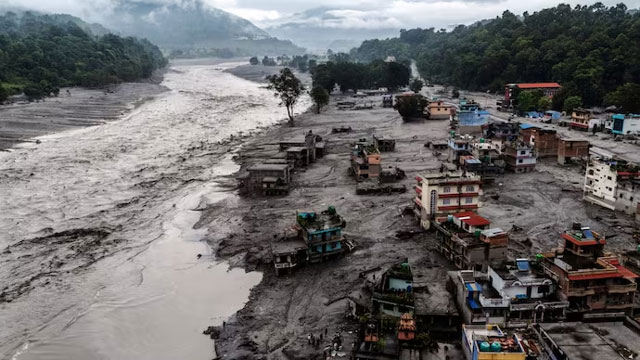
More than 21,300 security personnel are involved in rescue operations, while helicopters are being used to evacuate survivors and deliver food and other essential supplies to communities cut off by damaged roads and bridges. Around 12,000 people have been rescued so far.
Chitwan has reported the highest number of deaths at 321, followed by Nawalparasi East with 216. Authorities fear the toll could rise further as search operations continue in eight affected districts.
The disaster has also left more than 600 workers from 11 hydropower projects unaccounted for, with several feared trapped in tunnels and underground facilities. At least 122 people are missing from Upper Trishuli-3B, while 30 to 40 workers are believed to be trapped at the underground powerhouse of Upper Trishuli-3A.
China has warned that ice masses around a crater formed in the Chhochen River could still collapse and trigger another destructive surge downstream. However, drone images showed that most of the water accumulated inside the crater had drained and the river had returned to its normal flow. Remote-sensing analysis also found no significant changes in 14 previously identified glacial lakes in the Gyirong Tsangpo basin.
Intermittent rainfall and rising river levels have prompted fresh flood warnings in several parts of Nepal. Authorities are strengthening river surveillance and early warning systems, including monitoring cameras and satellite-based communication systems in vulnerable areas.
The floods have severely damaged Nepal’s transport infrastructure, with at least 19 motorable bridges washed away and several highways blocked or damaged. The destruction has also disrupted the key overland trade route with China through the Rasuwagadhi border crossing.
The disaster has renewed Nepal’s calls for greater international support to tackle the impact of climate change. Officials have highlighted the country’s vulnerability to glacier melt, glacial lake outburst floods, landslides and extreme rainfall despite its relatively small contribution to global greenhouse gas emissions.
India has also continued its rescue and relief efforts. The Ministry of External Affairs said 163 Indian nationals had been rescued, while 151 people had left China on Tuesday as part of the wider regional rescue effort.
Authorities have meanwhile warned against spreading fake, recycled or AI-generated photographs and videos of the disaster. Nepal’s Press Council has received 101 complaints and directed 72 users to remove misleading, inappropriate or excessively graphic material.