Daijiworld Media Network – New Delhi
New Delhi, Sep 10: The amount of cash withdrawn from each ATM in India has declined by around 20% from 2022 levels, even as the number of ATMs has remained broadly unchanged, indicating a significant shift in consumer payment habits.
CapitalMind CEO Deepak Shenoy said the trend reflects the growing use of digital payments for everyday transactions.
“While the number of ATMs in India is the same as 2022, the amount of money withdrawn per ATM is about 20% lower now,” Shenoy said.
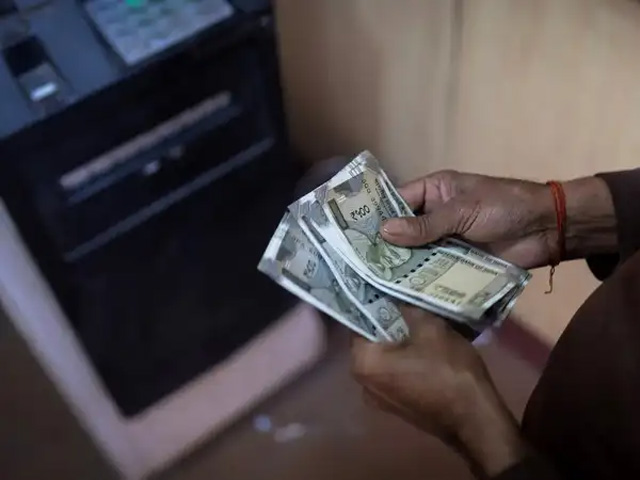
The decline in ATM withdrawals comes despite an increase in currency in circulation, suggesting that the rise in cash levels is not necessarily being driven by withdrawals through ATMs.
“Even though cash in circulation has increased, this is not cash driven through ATMs,” Shenoy said. He suggested that consumers could instead be withdrawing larger amounts directly from bank branches, including for real estate transactions and other high-value purchases.
At the same time, smaller and more frequent payments are increasingly shifting to digital platforms, particularly the Unified Payments Interface (UPI).
UPI transactions reached Rs 29.8 lakh crore in August, remaining close to the record Rs 29.9 lakh crore registered in May and July 2026, according to NPCI data.
The scale of the shift is evident in UPI's growth over the past decade. Annual UPI transaction volume rose from 1.78 crore in FY17 to more than 24,162 crore in FY26.
The Reserve Bank of India's Payment System Report for December 2025 also highlighted the rapid expansion of digital payments. India is now processing 77.6 crore digital payment transactions every day, with UPI accounting for 85.5% of payment volumes during the second half of 2025.
UPI transactions rose to 12,191 crore in the second half of 2025 from 1,530 crore in the first half of 2021, while overall digital payment volumes have increased 33-fold over the past decade.
The shift is also reflected in debit-card usage, with transaction volumes falling 67% between 2021 and 2025 as consumers increasingly turned to UPI for everyday payments.
The changing payment landscape could be reducing the need for ATM withdrawals for routine purchases such as groceries, food, transport and other small-value transactions.
However, different payment systems continue to serve different purposes. While UPI dominates transaction volumes, RTGS accounted for just 0.1% of transaction volume but 68.6% of total transaction value, reflecting its importance for large-value transfers.
Credit-card spending has also risen sharply, reaching Rs 23.2 lakh crore in 2025 compared with Rs 8.9 lakh crore in 2021. Meanwhile, the Bharat Bill Payment System recorded more than 16-fold growth in transaction value over four years, reaching Rs 14.8 lakh crore.
The emerging trend suggests that cash is not disappearing but its usage and access are changing. UPI is increasingly handling smaller, everyday payments, while cash withdrawn from bank branches may continue to cater to larger-value transactions.
For ATM networks, however, the shift means lower cash withdrawals per machine even as cash continues to remain an important part of India's economy.