Daijiworld Media Network – New Delhi
New Delhi, Sep 14: Crude oil prices jumped sharply on Monday, with international benchmark Brent crude rising above $107 a barrel as escalating tensions in the Middle East fueled fears of major disruptions to global energy supplies.
Brent for November delivery gained 3.20 per cent to trade at $107.82 a barrel, while US benchmark West Texas Intermediate (WTI) for October delivery also rose 3.20 per cent to $103.20 per barrel. The surge extends last week’s rally that pushed both key contracts back past the psychological $100 mark.
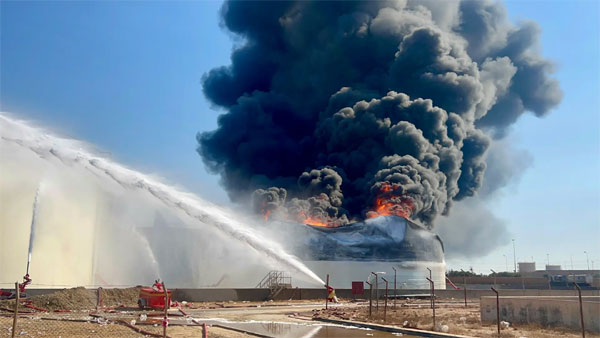
Global energy markets remain focused on critical security developments across the Gulf and Red Sea shipping routes, which underpin a major portion of the world’s seaborne crude trade, following severe disruptions caused by Houthi forces seizing key ports.
The latest price spike follows reports that Saudi Arabia temporarily shut down its critical East-West pipeline after drone strikes. Tensions escalated further after a merchant vessel was struck in the Strait of Hormuz on Sunday, with Iranian authorities confirming one fatality and three injuries.
Iran has tightened its grip over the strategic strait, requiring commercial vessels to obtain transit permissions and deliberating a mechanism to levy service fees, with non-compliant ships facing strikes. In response, the United States bombed targets along the Iranian coastline to challenge Tehran's control over the waterway. Concurrently, Oman has postponed scheduled talks between Iran and Gulf states regarding the future of the maritime passage.
Brent crude prices have now surged over 30 per cent from lows recorded in early August, after diplomatic efforts to secure a permanent agreement between the US and Iran to halt hostilties failed to materialize. The resumption of active combat later in August has further aggravated global energy security concerns.
Compounding supply anxieties is a sharp drop in Saudi Arabia's crude output. Riyadh reported to OPEC that it produced 6.2 million barrels per day in August—the lowest monthly production level recorded in 2026 and a 23 per cent decline compared to July levels—following threats by Iran-backed Houthi rebels in Yemen targeting oil shipments along Saudi Arabia's western coast.