Daijiworld Media Network - Srinagar
Srinagar, Oct 4: Nearly two-thirds of patients recently diagnosed with Type 2 diabetes mellitus (T2DM) were found to have metabolic dysfunction-associated steatotic liver disease (MASLD), with the condition more prevalent among women than men, according to a study by a team of doctors from Kashmir.
The study found MASLD in 64 per cent of 272 patients examined. Higher body mass index (BMI), waist-to-hip ratio, elevated liver enzymes and triglycerides were among the factors associated with the condition and, in some cases, its severity.
The research, titled *Prevalence, Clinical Profile and Risk Factors of Metabolic Dysfunction–Associated Steatotic Liver Disease (MASLD) in Newly Diagnosed Type 2 Diabetes Mellitus*, was authored by Hilal Bhat of the Department of Medicine, Government Medical College (GMC), Srinagar; Rayees ul Hamid Wani, Suhail Jabbar Mir and Javaid Ahmad Bhat of the Department of Medicine, GMC Handwara; Moomin Hussain Bhat of the Department of Endocrinology, Superspeciality Hospital, GMC Srinagar; and Shariq Rashid Masoodi of the Department of Endocrinology, Sher-i-Kashmir Institute of Medical Sciences (SKIMS), Soura, Srinagar.
The original research paper was published on September 30, 2026, in Volume 33, Issue 3 of the *Romanian Journal of Diabetes, Nutrition and Metabolic Diseases*.
The researchers studied 272 adults who had been diagnosed with T2DM within the previous six months. The group comprised 146 men and 126 women.
Ultrasonography detected some degree of hepatic steatosis in 174 patients, placing them in the MASLD group, while 98 had no evidence of the condition.
The overall prevalence of MASLD was 64 per cent. The prevalence was higher among women at 71.4 per cent, compared with 57.5 per cent among men.
The researchers said the findings demonstrated a "substantial burden" of MASLD even among patients who had only recently been diagnosed with diabetes.
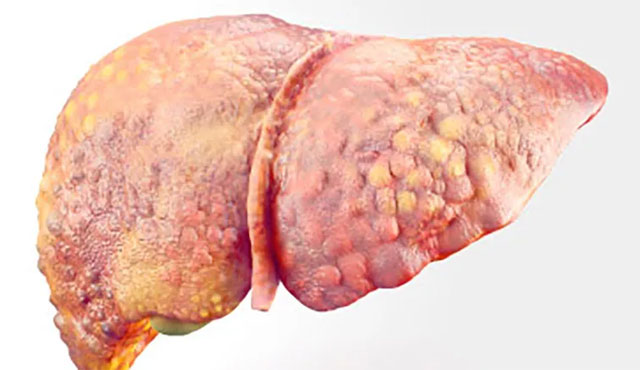
MASLD refers to the accumulation of fat in the liver associated with metabolic dysfunction. The condition can remain asymptomatic and, if it progresses, may be associated with more serious complications including metabolic dysfunction-associated steatohepatitis, liver fibrosis, cirrhosis and hepatocellular carcinoma.
The study found clear associations between body fat measurements and MASLD. Patients with MASLD had a higher average BMI than those without the condition, at 26.96 compared with 26.32 kg/m². Their average waist-to-hip ratio was also higher at 0.99 compared with 0.96.
The association became more pronounced with increasing severity of fatty liver. Median BMI increased from 25.2 kg/m² among patients with Grade I disease to 26.2 kg/m² among those with Grade II disease. The median waist-to-hip ratio similarly rose from 0.97 to 1.01.
The researchers said the findings suggested that increasing overall and central adiposity was associated not only with the presence of MASLD but also with greater severity of hepatic steatosis.
Patients with MASLD also recorded higher levels of several biochemical markers.
Mean aspartate aminotransferase (AST) was 41.18 U/L among MASLD patients compared with 31.59 U/L among those without the condition, while alanine aminotransferase (ALT) was 59.48 U/L compared with 42.40 U/L.
Serum uric acid, fasting plasma glucose, fasting insulin and triglycerides were also higher in the MASLD group. Mean triglycerides stood at 220 mg/dl among patients with MASLD compared with 192 mg/dl among those without it.
In contrast, high-density lipoprotein cholesterol (HDL-C), commonly referred to as "good" cholesterol, was lower among MASLD patients at 32 mg/dl compared with 39 mg/dl.
Serum uric acid also increased substantially with the severity of fatty liver. Median levels were 4.6 mg/dl in Grade I disease and 6.6 mg/dl in Grade II disease, compared with 4 mg/dl among patients without MASLD.
Multiple linear regression analysis identified BMI, waist-to-hip ratio, ALT, triglycerides and HDL as independently associated with MASLD.
BMI, waist-to-hip ratio, ALT and triglycerides showed positive associations, while HDL showed an inverse association.
The researchers concluded that obesity was a major metabolic risk factor, with BMI and waist-related measurements associated with both the presence and severity of MASLD.
The study was based on patients attending the endocrinology outpatient department of SKIMS, a tertiary-care endocrinology centre, between June 2020 and July 2023.
Patients aged 18 years or older who had been diagnosed with T2DM within the preceding six months were included. Those with Type 1 diabetes, a history of alcoholism, pregnancy, known liver or kidney disease, endocrinopathies, genetic disorders or use of medicines known to cause fatty liver were excluded.
MASLD was diagnosed using imaging evidence of hepatic steatosis along with at least one cardiometabolic risk factor. Liver assessment was carried out through B-mode ultrasonography by a single experienced senior radiologist.
The researchers classified fatty liver into three grades on ultrasound. Grade I indicated increased hepatic echogenicity with visible periportal and diaphragmatic echogenicity. Grade II involved increased echogenicity with imperceptible periportal echogenicity but no obscuration of the diaphragm, while Grade III involved obscuration of the diaphragm.
The researchers said the association between diabetes and MASLD appeared to be bidirectional, with metabolic dysfunction, obesity and insulin resistance potentially contributing to both conditions.
They also noted that South Asians could face a relatively high metabolic risk despite not necessarily appearing overtly obese, as body composition characterised by greater adiposity and lower muscle mass could increase susceptibility to metabolic disorders.
The study called for greater attention to liver health when patients are diagnosed with T2DM.
"The significant prevalence of MASLD in newly diagnosed T2DM patients in this study underscores the importance of incorporating routine screening in diabetic care," the authors wrote, adding that early detection could help reduce the burden of liver-related complications.
The researchers, however, cautioned that the findings should be interpreted in light of several limitations. As the study was cross-sectional, it could establish associations but could not demonstrate causation or determine whether the identified factors caused disease progression.
They also noted that ultrasound sensitivity varies depending on the degree of hepatic steatosis and that the study did not use liver biopsy or advanced imaging techniques. The single-centre design and ethnically homogeneous study population could also limit the generalisability of the findings to other populations and healthcare settings.
The authors concluded that patients diagnosed with T2DM should undergo thorough clinical assessment for early detection and management of hepatic impairment, particularly in the presence of obesity and other metabolic risk factors.