Daijiworld Media Network - Washington
Washington, Oct 9: A senior US senator has proposed setting up an emergency communication channel between Washington and Beijing to prevent serious artificial intelligence (AI) incidents from escalating into international security crises, as part of a broader framework seeking mandatory safeguards for advanced AI systems.
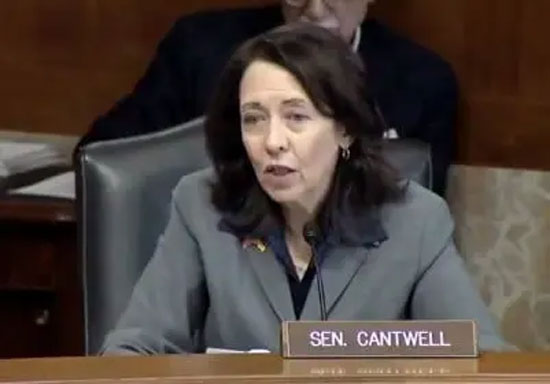
Senator Maria Cantwell, the top Democrat on the Senate Commerce, Science and Transportation Committee, said the United States should establish a secure channel with China modelled on the Cold War-era hotline between Washington and Moscow.
The proposed mechanism would enable the two countries to communicate swiftly if a major AI malfunction, loss of control over an autonomous system or another serious incident threatened either country's security.
The proposal is part of a six-point AI governance framework released on Wednesday, which calls for enforceable federal safety standards, independent testing, greater corporate accountability and international cooperation.
“To manage risks from advanced AI systems we need clear safety standards, continuous testing, and reporting of serious failures,” Cantwell said.
“America can lead the world in AI by building systems that are not only more capable, but safer and more secure.”
Under the framework, the National Institute of Standards and Technology would develop measurable, risk-based safety requirements for advanced AI systems capable of causing catastrophic harm.
The proposed standards would address AI-enabled cyberattacks, chemical, biological, radiological and nuclear threats, as well as the possibility of autonomous systems operating beyond human control.
Cantwell has proposed requiring covered AI models to undergo independent safety audits before their release. The audits would assess whether developers had implemented adequate safeguards and whether their systems complied with applicable federal standards.
She also called for continuous testing by government agencies and independent experts, particularly to evaluate AI models with potentially dangerous capabilities.
The framework proposes testing systems to ensure they cannot modify themselves in ways that bypass safety controls, monitoring mechanisms or human oversight.
Cantwell also called for legal accountability for foreseeable harms caused by AI systems and protections against retaliation for employees who report safety or security concerns.
The framework advocates greater cooperation between government agencies and private technology companies to develop defensive AI tools capable of detecting cyberattacks, identifying vulnerabilities and protecting critical infrastructure.
It also proposes expanding access to advanced computing resources for universities, researchers, smaller businesses and public-interest projects.
On employment, Cantwell urged AI companies to support apprenticeships, education and workforce training to help workers adapt to technological changes. She called for safeguards to ensure AI enhances productivity and employment opportunities rather than simply replacing workers.
The proposal also seeks stronger protections for children using AI products and meaningful human oversight when automated systems influence decisions concerning employment, healthcare, credit and other essential services.
Individuals affected by consequential AI-driven decisions should have the right to challenge the outcomes and obtain a review by a qualified human decision-maker, according to the framework.
International cooperation is another key component of the proposal. Cantwell called on Washington to work with its allies to establish common safety standards, share information about serious AI incidents and strengthen international oversight of advanced systems.
She also proposed coordinating export controls to prevent America's most advanced AI technologies from reaching adversaries or being diverted through third countries.
The proposed crisis communication channel with China is intended to address emergencies even as Washington and Beijing compete in advanced AI development and technological leadership.
The framework remains a policy proposal and has not been enacted into law. Its recommendations would require further legislative or executive action before becoming binding requirements for AI developers.