Daijiworld Media Network - Bengaluru
Bengaluru, Oct 12: A newer PET scan technique using a tracer called Fibroblast Activation Protein Inhibitor (FAPI) can detect the spread of ovarian cancer within the abdomen more accurately than conventional contrast-enhanced CT scans, according to a study by Bengaluru doctors.
The prospective study, involving 200 women with ovarian cancer, has been published in the Journal of Nuclear Medicine.
Peritoneal spread, in which cancer cells spread across the lining of the abdomen, is common in advanced ovarian cancer and plays a crucial role in determining whether a patient is suitable for surgery. However, small or flat cancer deposits, particularly around the bowel and upper abdomen, can be difficult to identify using conventional imaging techniques. Accurately assessing the extent of the disease helps doctors decide whether a patient should undergo surgery or receive chemotherapy before an operation.
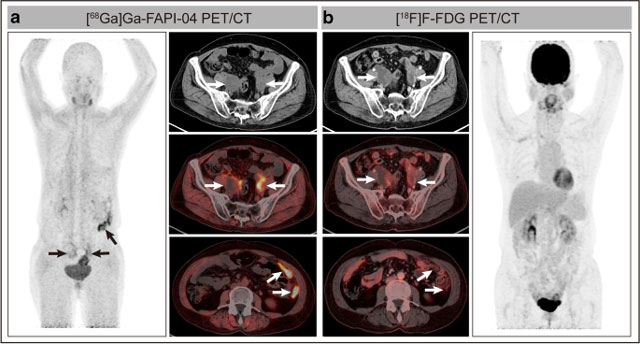
Conducted at Aster International Institute of Oncology, Bengaluru, between May 2024 and April 2025, the study compared 68Ga-FAPI-04 PET/CT with contrast-enhanced CT scans in 200 patients before cytoreductive surgery. The findings from both imaging techniques were compared with the actual extent of the disease observed by surgeons during surgery.
FAPI PET detected peritoneal disease with a sensitivity of 81.8%, compared with 54.6% for conventional CT scans. Its overall accuracy was 86%, against 78% for CT.
The study also found that CT scans tended to underestimate the extent of cancer spread. The average Peritoneal Cancer Index (PCI), a score used to measure the spread of cancer within the abdomen, was 15.7 during surgery, compared with 14.1 on FAPI PET and 10.8 on CT.
Dr Somashekhar SP, group medical director of Aster DM Quality Care and lead consultant in surgical, gynaecological oncology and robotic surgery at Aster Hospitals, Whitefield, said accurately determining the extent of peritoneal disease before surgery could help doctors select the most appropriate treatment strategy.
He said FAPI PET was a relatively new technology in India and was currently available at only a limited number of cancer centres. According to him, findings from the scan led to changes in treatment decisions in around 18 to 21% of patients in the study.
Unlike FDG PET, which relies on glucose metabolism and can be affected by normal bowel activity and inflammation, FAPI targets fibroblast activation protein (FAP), found in cancer-associated fibroblasts surrounding tumours. Its low background uptake makes cancer deposits more visible on scans.
Doctors said the technology could potentially reduce the need for invasive procedures such as diagnostic laparoscopy in some patients by providing a clearer picture of disease spread before surgery.
However, the researchers acknowledged that the study was conducted at a single centre and said further prospective studies would be required to confirm the findings.