Daijiworld Media Network - Mumbai
Mumbai, Oct 26: Maharashtra Cultural Affairs Minister and Mumbai Suburban Guardian Minister Ashish Shelar has proposed suspending all construction and demolition activities across the Brihanmumbai Municipal Corporation (BMC) limits for one day every week to curb rising air pollution in the city.
In a letter to BMC Commissioner Ashwini Bhide on Monday, Shelar called for immediate and effective measures, warning that air pollution could worsen during the winter months.
He noted that citizens had submitted several representations highlighting the rising pollution levels, while the Bombay High Court had also expressed concern over the deteriorating air quality.
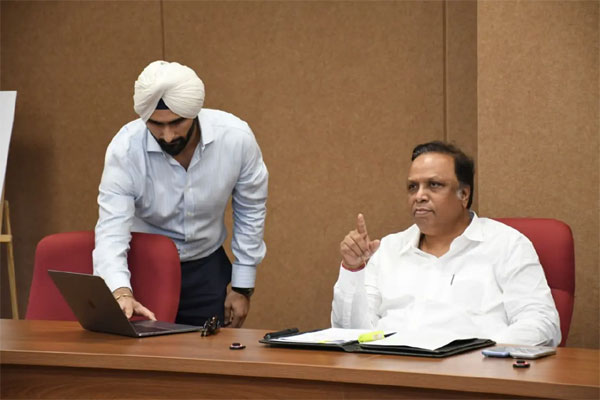
Welcoming the measures already undertaken by the BMC, Shelar referred to pollution-control measures at construction sites, ward-level inspection teams, monitoring of 3,166 construction sites through the Central Air Quality Dashboard, a construction debris management system, the use of clean fuels in bakeries and pollution-control systems at crematoriums.
He also noted that PM10 pollution levels in Mumbai had declined by approximately 48 per cent since 2017-18. However, he stressed that more comprehensive measures were necessary to effectively address the problem.
Shelar proposed a Mumbai-specific Graded Response Action Plan (GRAP) to ensure that predetermined measures are implemented promptly whenever air quality deteriorates.
He called for roads in pollution-prone areas and along major traffic corridors to be washed using treated wastewater. Other suggestions included water sprinkling, mechanised night-time road cleaning, urgent pothole repairs and timely restoration of roads following excavation work.
To tackle waste burning and illegal dumping, he proposed setting up a dedicated helpline and social media account to report incidents of waste burning, fires at dumping grounds and illegal disposal of construction debris. He said complaints should be addressed promptly, offenders penalised and weekly action-taken reports made public. Anti-smog guns and mist sprayers should also be deployed at highly polluted locations and major traffic junctions.
Calling for stricter enforcement against polluting vehicles, Shelar suggested coordinated action by the Mumbai Traffic Police and the Regional Transport Office (RTO), along with increased checks of Pollution Under Control (PUC) certificates. He also proposed restricting the entry of heavy vehicles without valid certificates into the BMC area.
He stressed that pollution-control measures should not be confined to Mumbai but implemented in coordination with relevant local bodies across the Mumbai Metropolitan Region (MMR).
Shelar further called for the urgent installation of pending sensor-based air-quality monitoring systems at construction sites. He also urged the conversion of the remaining 87 bakeries using wood or coal to cleaner fuels.
Raising concerns over industrial fuel consumption in the MMR, he cited a report by the Centre for Science and Environment stating that industries in the region consume approximately two million tonnes of coal for energy and fuel.
To encourage industries to switch to cleaner energy sources, Shelar suggested exploring low-interest loans, concessions on government taxes and financial assistance through a Green Energy Fund.
He also called for incentive schemes to accelerate the electrification of public and private transport vehicles in Mumbai and surrounding areas, with active participation from the automotive industry and private companies.
Emphasising the importance of public, youth and industry participation in tackling air pollution, Shelar proposed meetings in all 26 BMC wards involving citizen groups, elected representatives and concerned government departments to identify local issues and formulate suitable solutions.
He also suggested holding a separate meeting with representatives of leading industrial companies to secure their cooperation, technical assistance and financial support for pollution-control initiatives.
Underscoring that air pollution was a serious issue directly affecting citizens' health and quality of life, Shelar stressed the need for urgent and long-term measures, effective utilisation of available resources and stronger coordination among various departments to address the problem.