Daijiworld Media Network - New Delhi
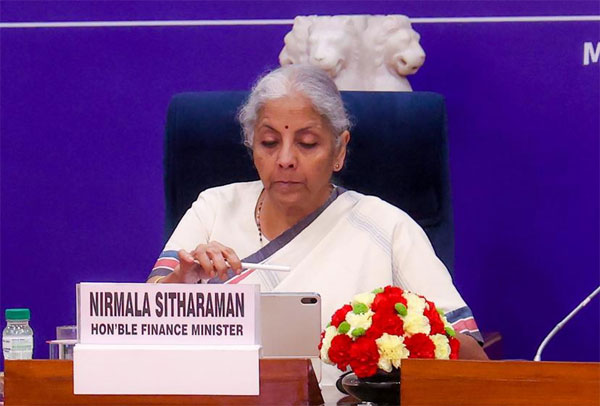
New Delhi, Oct 30: Finance Minister Nirmala Sitharaman on Friday highlighted India's significant progress in poverty reduction, citing the World Bank's October 2026 Poverty and Equity Brief, which ranks the country among those witnessing the fastest declines in poverty globally.
According to the report, around 49.6 crore people moved above the lower-middle-income poverty threshold of $4.20 per day between 2011 and 2023, with the poverty rate declining sharply from 57.7 per cent to 16.1 per cent, the Finance Minister said.
Extreme poverty also registered a substantial decline during the same period, falling from 27.1 per cent to 2.6 per cent, measured against the poverty threshold of $3 per day. Both poverty thresholds are based on 2021 purchasing power parity (PPP).
The report further noted that employment increased by 13.4 crore people between 2017 and 2023, nearly twice the growth in the working-age population. Rural women accounted for a significant share of the employment gains, entering paid work and increasing the number of earning members in their households.
Both rural and urban households recorded substantial welfare improvements, with faster progress in rural areas helping narrow the gap between rural and urban India.
Access to electricity also reached 99 per cent of the population, according to the report's 2022 survey data.
The World Bank identified strong consumption growth, rising employment, particularly among women, and expanded social transfers, including food subsidies, as the major factors driving poverty reduction.
Sitharaman said the sustained policy efforts under the leadership of Prime Minister Narendra Modi were producing tangible results and strengthening the foundations for inclusive growth and greater economic opportunities.
“This is the reason why NDA govt wins people’s trust and mandate of our citizens. We remain committed to building on this progress through productive employment, stronger household incomes and effective delivery of public services, so that aspirations of our people are met,” she added.
The World Bank report observed that India had made significant progress over the past decade in reducing poverty across both monetary and non-monetary dimensions, recording one of the fastest declines in poverty worldwide.
It projected that poverty would continue to decline, although at a slower pace. The poverty rate at the $4.20-a-day threshold is expected to fall from 14.2 per cent in 2026 to 12.1 per cent by 2028.
The report clarified that these indicative projections are based on microsimulations and could be revised as labour market and macroeconomic data are updated or new information becomes available.
On non-monetary poverty, the report cited figures from the Oxford Poverty and Human Development Initiative's (OPHI) Multidimensional Poverty Index (MPI), which showed a sharp decline from 53.8 per cent in 2005-06 to 16.4 per cent in 2019-21. The World Bank's own MPI measure stood at 15.5 per cent in 2022-23.
The improvement was primarily driven by rising consumption, increased employment opportunities, particularly for women, and expanded social protection measures, including food subsidies.
However, the report pointed out that as poverty declined, it became increasingly concentrated among households with lower educational attainment, fewer assets, limited access to stable employment and higher dependency ratios.
Despite the overall progress, wage disparities remain significant. Median earnings among the top 10 per cent of workers were approximately 13 times higher than those of the bottom 10 per cent in 2023, the report added.