Daijiworld Media Network - Antalya
Antalya, Nov 9: World leaders, government delegates and climate activists will begin negotiations on Monday at the 31st United Nations Climate Change Conference (COP31), amid growing concerns over rising global temperatures, extreme weather events and the challenges of reducing greenhouse gas emissions.
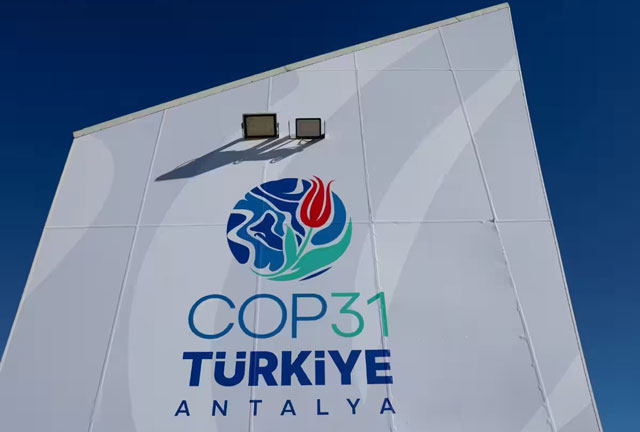
The summit, being held in the Turkish Mediterranean city of Antalya from November 9 to 20, comes after a year marked by rising temperatures, deadly heatwaves in Europe and devastating floods in countries such as Nepal.
The discussions are also taking place against the backdrop of the ongoing war involving Iran, which has effectively disrupted shipping through the Strait of Hormuz and pushed up global oil and fuel prices. The disruption has also affected the cost of products derived from fossil fuels, including fertilisers and pesticides, prompting governments to reassess their short- and long-term energy policies and consider greater investment in renewable sources such as wind and solar power.
Delegates will face pressure to strengthen climate action commitments while implementing promises made at previous summits. The challenge is particularly significant as climate scientists warn that global average temperatures are set to exceed the 1.5-degree Celsius threshold above pre-industrial levels.
Limiting global warming to 1.5 degrees Celsius was a key objective of the 2015 Paris Agreement and has remained central to international climate negotiations. However, the prospect of exceeding the target highlights the difficulties countries have faced in reducing greenhouse gas emissions from the burning of coal, oil and natural gas.
Turkish Environment Minister Murat Kurum, who is presiding over COP31, acknowledged that the world was on course to cross the threshold but said countries should not reduce their climate ambitions.
"This is the first COP where it is clear beyond a reasonable doubt that the world will overshoot the 1.5-degree target," Kurum said, adding that the summit would focus on translating existing commitments into concrete action rather than announcing new targets.
Kurum has outlined an 'Action Agenda' covering measures such as methane reduction and the development of climate-resilient cities. Electrification is another major priority, with the agenda seeking to increase electricity's share of energy use from 21 per cent to 35 per cent by 2035, preferably through renewable sources such as solar and wind.
Negotiators are also expected to discuss financial assistance for developing countries to help them adapt to rising temperatures and extreme weather events, as well as support their transition away from fossil fuels.
The previous two climate summits, COP30 in Brazil and COP29 in Azerbaijan, faced criticism over the limited progress made on reducing greenhouse gas emissions. Their final agreements did not explicitly mention fossil fuels, unlike COP28 in Dubai, where countries agreed to transition away from them.
The absence of the United States is expected to be another major concern at the Antalya summit. The country, the world's second-largest emitter of greenhouse gases after China, will not participate in the negotiations after President Donald Trump withdrew it from international climate commitments during his first term and again after returning to office in January 2025.
UN Climate Change Executive Secretary Simon Stiell said no single summit could end climate change overnight but expressed confidence that COP31 would deliver further progress.
In a departure from previous arrangements, Turkey and Australia are jointly organising COP31 after initially competing to host the event. Turkey is serving as the official host, while Australia is leading the negotiations. Both countries, however, have faced criticism over their continued reliance on coal.