Daijiworld Media Network - New Delhi
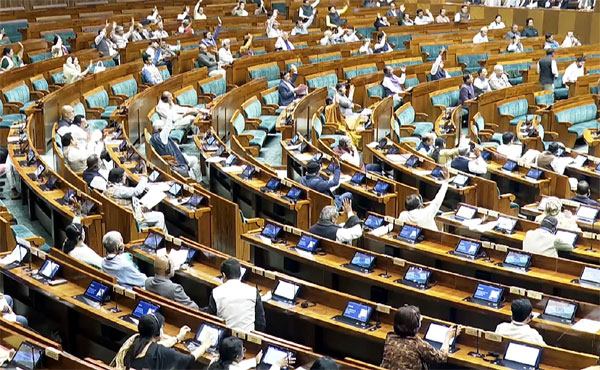
New Delhi, Dec 5: The Lok Sabha on Friday passed the Health Security Se National Security Cess Bill through a voice vote following a lively debate marked by both support and sharp criticism from members across party lines.
Union Finance Minister Nirmala Sitharaman, piloting the Bill, clarified that the proceeds of the cess would be strictly ring-fenced for two purposes: strengthening national security and supporting public health. She emphasized that the levy was constitutionally empowered under Article 270, fully accountable to Parliament, and subject to oversight by the Comptroller and Auditor General of India (CAG).
The Finance Minister explained that the cess would target demerit goods, such as pan masala, and be levied based on production capacity, a method long used in excise law to prevent evasion. She assured MPs that any changes in rates or goods would require Parliamentary approval, ensuring transparency.
“Part of the cess collected will be spent on public health, and the other part on defence. Public health is a state subject, defence is on the Union List. We need to raise resources to match today’s needs,” Sitharaman said.
Opposition Concerns
Several opposition MPs raised objections:
• Congress MP Shashikanth Senthil called the Bill a “blank cheque” for the Union government, citing unclear allocation of funds and harsh penalties akin to the Prevention of Money Laundering Act.
• DMK MP T. Sumathy criticized the Bill’s “linguistic hybrid” title, urging replacement of “se” with “for.”
• Trinamool Congress MP Saugata Roy objected to the Finance Minister speaking in Hindi, which prompted her to note that translation services were available.
• Congress MP Prabha Mallikarjun raised federalism concerns, noting that states would not receive their share of the cess despite funding most public health expenditure.
• NCP–SP MP Supriya Sule questioned why the levy was introduced as a cess rather than a tax, warning that provisions allowing rate doubling without Parliament’s approval undermined legislative oversight.
• MPs Umeshbhai Patil and Hanuman Beniwal highlighted the ineffectiveness of bans on liquor, gutkha, and pan masala, suggesting regulation instead of prohibition.
Despite objections, the Union government maintained that the cess would make demerit goods less affordable while generating critical resources for health and national security. The Bill was ultimately passed, reinforcing the government’s twin focus on urgent national priorities.