Daijiworld Media Network - New Delhi
New Delhi, Jan 11: The Congress on Sunday accused the government of attempting to minimize the health impacts of air pollution, claiming it is trying to mask the scale of its “incompetence” and “negligence.”
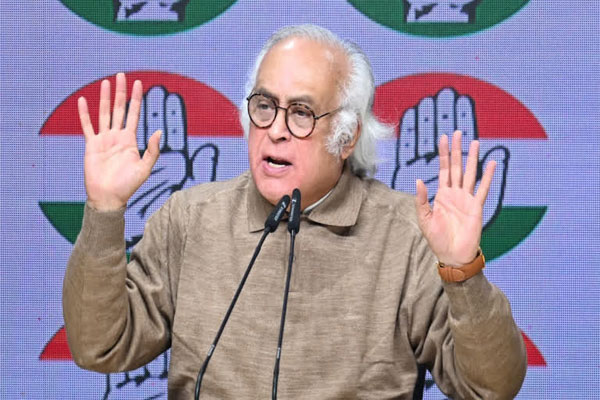
Jairam Ramesh, Congress MP and General Secretary (Communications), cited a recent analysis by the Centre for Research on Energy and Clean Air (CREA) and called for urgent reforms, starting with acknowledging the nation-wide public health crisis linked to pollution. He urged giving legal backing to the National Clean Air Programme (NCAP) and strengthening its enforcement and monitoring capacities across all Indian cities, not just the so-called “non-attainment” cities.
He also called for restoring the National Green Tribunal’s independence and rolling back environmental law amendments from the past decade that he termed “anti-people.”
“The CREA analysis confirms what has long been India’s worst-kept secret – air quality is a structural, nation-wide crisis, and the government’s response has been grossly inadequate,” Ramesh said. He added that Parliament had already seen attempts by the government, on July 29, 2024, and December 9, 2025, to downplay the health impact of pollution.
According to the CREA report, nearly 44% of Indian cities – 1,787 out of 4,041 statutory towns assessed – suffer from chronic air pollution, with PM2.5 levels consistently exceeding national standards from 2019 to 2024 (excluding 2020).
Ramesh highlighted the NCAP’s limited reach: of the 1,787 affected towns, only 130 are under NCAP, and 28 of those still lack continuous ambient air quality monitoring stations (CAAQMS). Among the 102 cities with monitoring infrastructure, 100 recorded PM10 levels at 80% or higher of the permissible limit. “NCAP, touted as the National Clean Air Programme, is currently addressing only 4% of India’s chronically polluted cities,” he said, dubbing it a “Notional Clear Air Programme.”
He suggested several reforms, including overhauling the Air Pollution (Control and Prevention) Act of 1981 and the National Ambient Air Quality Standards (NAAQS) of 2009. Ramesh noted that India’s PM2.5 standards (60 µg/m³ for 24 hours, 40 µg/m³ annually) are far weaker than WHO guidelines (15 µg/m³ for 24 hours, 5 µg/m³ annually).
He also called for a substantial increase in NCAP funding. “The current budget of Rs 10,500 crore covers only 131 cities. The programme needs Rs 25,000 crore to target the 1,000 most polluted towns,” he said.
Ramesh emphasized that NCAP should focus on PM2.5 as the key performance metric and target major pollution sources such as solid fuel burning, vehicular emissions, and industrial pollutants.
“The government must urgently strengthen regulatory frameworks and fund allocations to tackle this public health emergency,” he added.