Daijiworld Media Network - Cairo
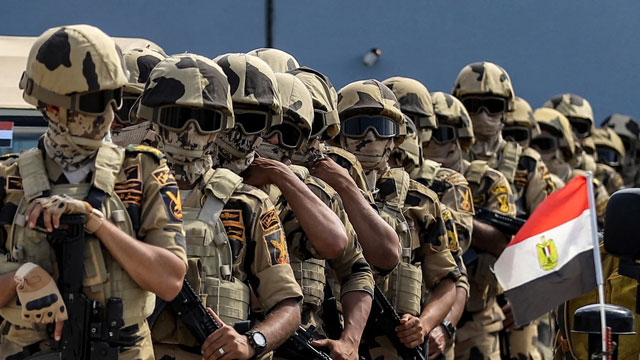
Cairo, Jan 14: Egypt’s deepening debt crisis has reportedly been compounded by the armed forces’ refusal to assist the government financially, despite allegedly holding secret reserves exceeding the country’s total foreign debt, according to senior banking and government officials quoted by Middle East Eye (MEE).
The revelations have raised fresh concerns over the opaque role of Egypt’s military in the economy at a time when the country is grappling with acute fiscal stress, dwindling foreign currency reserves and mounting repayment obligations. Egypt was expected to pay around $750 million in loan repayments to the International Monetary Fund (IMF) by the end of December but reportedly failed to meet the deadline.
As a stopgap measure, it was agreed “in principle” that the unpaid instalment would be deducted from Egypt’s upcoming IMF tranche, with interest added. However, the precise terms of the arrangement remain undisclosed, with both the IMF and the Egyptian government maintaining silence on the details.
A senior banking official, speaking anonymously, said the government had sought to borrow nearly three trillion Egyptian pounds (about $63.7 billion) by December, but domestic banks declined due to tight liquidity. “With no other borrowing options available, the government turned to the armed forces,” the official said.
According to the official, Prime Minister Mostafa Madbouly personally urged Defence Minister Abdel-Megeed Saqr in December to help cover the IMF instalment, but the request was firmly rejected. It remains unclear why a similar appeal was not made to President Abdel Fattah el-Sisi, who is the supreme commander of the armed forces and is believed to exercise direct control over military reserves.
Egypt’s IMF obligations include repayments of SDR 264 million ($377.8 million) in December and SDR 194 million ($277.6 million) in January, while the country’s total external debt obligations for 2025 reportedly exceed $60 billion.
The banking official further claimed that Egypt’s military holds vast dollar reserves — allegedly exceeding the country’s total external debt of $161 billion — which are physically deposited in state-run banks such as the National Bank of Egypt and Banque Misr. However, these funds are said to be entirely beyond civilian oversight and inaccessible to the government.
“These funds are real and physically held, but it is impossible to use them to repay debts,” the official told MEE, adding that while the military could theoretically resolve Egypt’s debt and foreign currency crisis, it has chosen not to relinquish control.
An Egyptian presidential source reportedly confirmed the presence of army deposits in the two banks, though without disclosing further details. Egyptian banks do not publicly reveal client information, and the military’s financial records remain shielded from civilian scrutiny.
In November, local banks had already extended 1.5 trillion Egyptian pounds to the government to cover loan repayments exceeding $350 million, leaving little room for further lending.
Despite this, Prime Minister Madbouly had publicly stated in late December that the government aimed to reduce debts to “unprecedented levels” by year-end, a claim that was not followed by any major announcements.
Officials told MEE that the military had intervened financially during a severe dollar shortage in 2022, injecting $10 billion to ease an import crisis. However, repeated proposals for the armed forces to contribute to external debt repayments — even for loans taken in their own name — were consistently rejected.
The military’s economic dominance in Egypt dates back to the 1952 revolution but expanded significantly after the 2011 uprising and further under President Sisi’s rule since 2014. The armed forces now control large segments of construction, agriculture, imports, exports and infrastructure, with revenues generated from toll roads, land sales, mining and gold production flowing directly into military-controlled accounts.
Officials claimed the military controls around 50 per cent of Egypt’s gold industry, generating hundreds of millions of dollars annually, alongside additional revenues from reprocessing and exporting gold. A 2014 law grants the defence ministry authority over mining operations, further strengthening the army’s grip on lucrative sectors.
In July, the IMF warned that Egypt’s military-dominated economic model was stifling private sector growth, deterring investment and perpetuating a cycle of debt. The lender highlighted the preferential treatment enjoyed by military-owned firms, including tax exemptions, access to cheap land and privileged credit.
On December 23, the IMF announced a staff-level agreement with Egypt on the fifth and sixth reviews of its Extended Fund Facility, potentially unlocking $2.5 billion in new financing, along with an additional $1.3 billion under the Resilience and Sustainability Facility, pending board approval.
While acknowledging recent stabilisation efforts, the IMF reiterated the need for accelerated structural reforms, including divestment of state-owned assets and a reduced role of the state — and the military — in the economy.