Daijiworld Media Network - New Delhi
New Delhi, Jan 16: The Union government has begun drawing up contingency plans to facilitate the return of Indian nationals stranded in Iran amid growing safety concerns as unrest continues in several parts of the country, official sources said.
“In view of the evolving situation in Iran, the Ministry of External Affairs is making preparations to facilitate the return of Indian nationals who wish to travel back to India,” a source said.
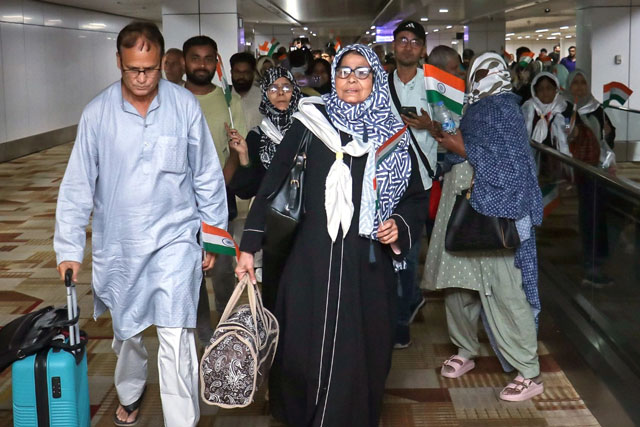
Students from Golestan University, along with a small number from Shahid Beheshti University of Medical Sciences and Tehran University of Medical Sciences, are expected to comprise the first batch of evacuees.
Sources indicated that the initial group could be flown out as early as Friday, subject to security clearances and availability of flight routes. The Jammu and Kashmir Students Association (JKSA) said all students have been duly registered and that the Indian Embassy has collected their personal details and passports.
“The first batch has been instructed to remain ready by 8 am,” the JKSA said in a statement.
The Indian Embassy in Tehran has stepped up efforts to reach out to Indian students and other nationals across different regions of Iran to assess who wishes to return. Officials said the outreach is being conducted largely through physical visits, as internet services remain suspended in several areas and telecommunication networks are unreliable.
Embassy officials are reportedly moving on the ground to identify students and coordinate logistics for the evacuation.
Planning efforts have also been complicated by disruptions to air travel. Air India has cancelled at least three US-bound flights and warned of possible delays on certain Europe-bound services after Iran briefly shut its airspace on Thursday.
The four-hour closure, triggered by volatile internal conditions and heightened tensions between Iran and the United States, disrupted major flight routes connecting India with the US and Europe. Iranian airspace has since been reopened.
The situation has drawn political attention in India as well. Jammu and Kashmir Chief Minister Omar Abdullah said he had spoken to External Affairs Minister S. Jaishankar regarding the safety of Indian students in Iran.
“I was assured that all necessary steps are being taken to safeguard the interests of our students,” Abdullah said, noting that a significant number of those affected are from Jammu and Kashmir.
Meanwhile, Iran has sought to downplay the crisis. Iran’s Ambassador to India, Mohammad Fathali, said the situation in the country is “under control,” claiming calm and stability are returning to several cities. He said large numbers of people have taken to the streets in support of the Islamic Republic, asserting that the country would not tolerate foreign interference despite economic pressures.
The unrest, which began late last month following a sharp plunge in the Iranian rial, has since widened into broader political protests. Rights groups have alleged that at least 3,428 people have been killed in a nationwide crackdown.
Official estimates suggest more than 10,000 Indians, including students, are currently residing in Iran.