Daijiworld Media Network – New Delhi
New Delhi, Jan 20: Senior Congress leader Salman Khurshid has said the Supreme Court missed a crucial opportunity to examine federalism in its “extreme form” during the Article 370 case, after accepting the government’s assurance on the restoration of Jammu and Kashmir’s full statehood.
Speaking at the launch of journalist Bashir Assad’s books, “Kashmir: The Unfiltered Truth” and “House Without Witness”, Khurshid said while India’s Constitution emphasizes fraternity, equality, and liberty, the principle of federalism has not always received adequate attention in judicial interpretation.
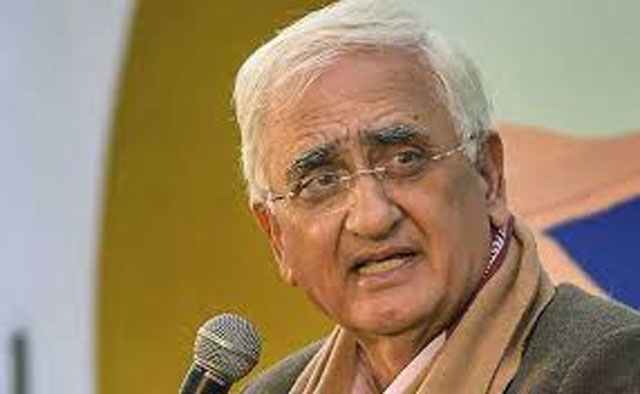
“Federalism is something we perhaps lost out on when there was a chance for the SC to take up what was a true test case of federalism. There was a crucial moment when an Article 370 matter came before the SC to examine federalism in its extreme form,” Khurshid said.
He added that the Supreme Court, relying on the Attorney General’s assurance that Jammu and Kashmir’s statehood would be restored swiftly, chose not to examine the broader questions of federalism. On December 11, 2023, the SC had upheld the revocation of Article 370 but ordered that statehood be restored “at the earliest.”
Explaining federalism, Khurshid described it as “unity in diversity”, noting that India’s strength lies in its linguistic, cultural, and regional differences, bound together by shared values. While he acknowledged that some argue uniformity is essential for national strength, he emphasized that respecting a diversity of views is key to India’s democratic ethos.
“Because we would be untrue to ourselves if we did not accept someone expressing what we might not agree with… a diversity of ideas and their exchange are important to us,” he said.
Rajya Sabha MP Manoj Sinha, also at the event, praised the books for presenting “unfiltered thought” and stressed the importance of listening to Kashmiris, rather than merely speaking at them. He highlighted that while Kashmiris experience pain and suffering, they also hold on to hope.
“Agony might make us uncomfortable, but we should be comfortable with hope,” Sinha concluded.