Daijiworld Media Network - Washington
Washington, Feb 4: After months of tension and mixed signals, the United States and India have unveiled an initial trade arrangement that pulls both sides back from a damaging standoff. While the agreement offers short-term relief, it is unlikely to fully repair the strain in the relationship, according to a former senior US official.
The view was expressed by Evan A. Feigenbaum, Vice President for Studies at the Carnegie Endowment for International Peace, in an opinion article published on the think tank’s blog on Wednesday.
Feigenbaum underlined the significance of timing. The US–India announcement came barely a week after India wrapped up a long-pending Free Trade Agreement with the European Union. The contrast, he noted, is telling. The pact with Brussels is a structured, legally grounded trade agreement, while Washington’s arrangement with New Delhi is described as a “deal” — a looser understanding that allows room for adjustment, but also carries the risk of being undone.
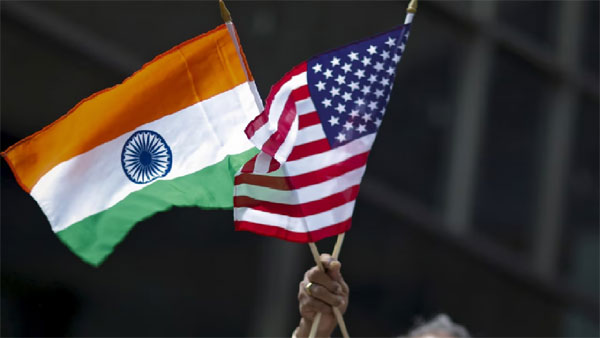
US President Donald Trump has said the deal reduces tariffs on Indian exports to 18 per cent, down from a combined 50 per cent earlier. The previous rate included a 25 per cent baseline tariff and an additional 25 per cent penalty linked to India’s imports of Russian oil. Trump has also claimed that India will eventually purchase $500 billion worth of US goods and services.
The White House, for its part, said the agreement includes a clear Indian commitment to halt purchases of Russian oil.
Feigenbaum argued that the earlier tariff structure was never viable, as it effectively froze progress across the broader bilateral relationship. Rolling it back, he said, was unavoidable, since allowing relations to worsen further would have inflicted greater long-term damage.
Under the revised tariffs, India gains a modest competitive advantage. Most ASEAN economies face duties of around 19 per cent, while Vietnam’s rate stands at 20 per cent, with additional penalties in cases involving Chinese transshipment. Against that backdrop, an 18 per cent tariff appears relatively favourable for Indian exporters.
However, Feigenbaum warned against overstating the benefit. Tariffs are only one element shaping trade and investment flows. Marginal differences of one or two percentage points are unlikely to outweigh Southeast Asia’s deeper supply chains and more mature manufacturing ecosystems.
He also expressed skepticism about the headline trade projections. In 2024, US merchandise exports to India totaled $41.5 billion, while services exports stood at $41.8 billion. Scaling this up to $500 billion, he said, would require an extraordinary leap and should be viewed more as an aspirational target than a realistic forecast.
Energy remains a particularly delicate issue. While India has been steadily cutting back on Russian crude imports, Feigenbaum said New Delhi is unlikely to formalize such commitments publicly. Longstanding ties with Moscow and India’s emphasis on strategic autonomy make an explicit break politically sensitive.
Crucially, he noted that recent developments have re-politicised a relationship that had largely moved beyond such pressures since the 2000s. Linking tariffs to India’s dealings with third countries, particularly on oil, has set a precedent that could have lingering effects.
The relationship, Feigenbaum concluded, is in a better place than it was a few months ago. Both Washington and New Delhi can claim a win for now. But rebuilding trust, once shaken, will take considerably more time.