Daijiworld Media Network - Panaji
Panaji, Feb 27: Viresh Borkar, MLA of the Revolutionary Goans Party from St Andre constituency, on Thursday called off his six-day fast unto death after the Goa government agreed to cancel projects sanctioned under Section 39A of the Town and Country Planning (TCP) Act in his constituency.
Borkar had been on an indefinite fast at Azad Maidan in Panaji, demanding repeal of Section 39A and scrapping of projects approved under it in St Andre.
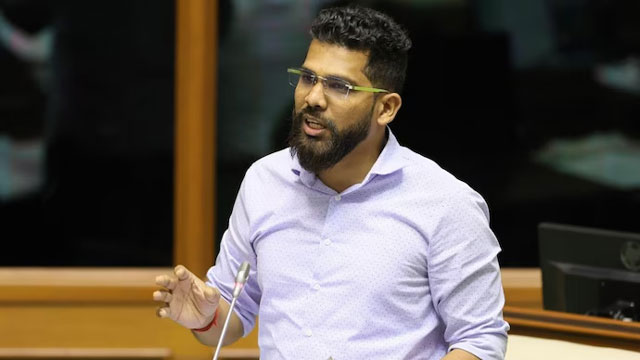
His protest ended after North Goa Collector Ankit Yadav met him at Azad Maidan and handed over a letter stating that all projects approved in St Andre constituency under Section 39A of the TCP Act had been cancelled.
Later addressing a press conference, Borkar confirmed that he was withdrawing his fast.
“My battle to save Goa will continue,” he said, asserting that his opposition to controversial land-use changes would persist.
Protest over zone change
Earlier in the day, police booked Borkar and 28 others for allegedly stealing files and other items from the Town and Country Planning Department office during a protest.
On February 20, Borkar had led a demonstration at the office of Chief Town Planner Vertika Dagur in the Patto locality, objecting to the change of zone in Pale-Siridao village under Section 39A. The provision empowers the chief town planner to convert non-settlement zones into settlement areas, paving the way for construction activity.
The protesters remained inside the office overnight. On the morning of February 21, Borkar was forcibly removed from the premises.
Citing police information, tribal leader Govind Shirodkar said 29 protesters, including Borkar, had been booked for allegedly stealing 10 files from the department as well as fans and cupboards.
“It is a ridiculous charge because police were present throughout the protest. The area is also under CCTV surveillance,” Shirodkar claimed.
The developments come amid growing public debate in Goa over land-use changes and the scope of Section 39A of the TCP Act, which critics argue enables large-scale conversions without adequate scrutiny.