Daijiworld Media Network - Dharmapuri
Dharmapuri, Mar 9: The traditional Palmarosa-based cottage industry in Dharmapuri district is facing a serious downturn as cultivation of the aromatic crop declines sharply due to falling demand, irregular rainfall and diminishing profits for farmers.
Producers say the situation has placed hundreds of small distillation units under pressure and is threatening the future of a rural livelihood that once supported many families in the region.
Palmarosa grass, scientifically known as Cymbopogon martinii, is widely grown in the rain-fed belts of Dharmapuri and nearby areas. The crop is processed to extract Palmarosa oil, an essential oil commonly used in the fragrance, cosmetics and personal care industries.
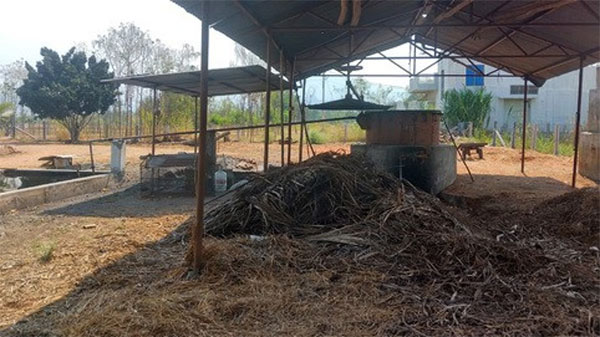
In recent years, however, farmers say the lack of a structured market and declining demand have discouraged cultivators from growing the crop. As a result, the area under Palmarosa cultivation in the district has reduced significantly, causing a shortage of raw material for oil extraction units.
The problem has been aggravated by inconsistent monsoon patterns, which have severely affected the growth of the rain-fed crop. Farmers say this combination of low production and poor market support has made the industry increasingly unsustainable.
Cultivators have appealed to the Agriculture Marketing Department to step in by ensuring fair pricing and introducing direct procurement mechanisms for Palmarosa oil. They warn that without government intervention, more farmers may abandon the crop altogether.
R. Murugan, a Palmarosa farmer and oil producer from Papparapatti, said erratic rainfall has badly affected production in recent years. He explained that the crop depends entirely on rain-fed conditions and cannot grow properly without sufficient rainfall.
Murugan noted that around five years ago, Palmarosa was cultivated on roughly 1,450 acres in the region, but the area has now fallen to nearly 410 acres.
He also pointed out that rising raw material costs have made oil extraction economically unviable. According to him, the price of Palmarosa grass has increased from about Rs 2,000 to Rs 3,000 per tonne, while nearly 1.5 tonnes of grass are required to produce one kilogram of oil. In one instance, he had to travel to Tiruvannamalai district to purchase grass due to local shortages. Factoring in transport, labour and production costs, the total expense reached nearly Rs 9,000 per kilogram of oil, leaving no margin for profit.
Another producer, S. Ramesh, said around 350 to 400 small distillation units operate across Dharmapuri and the nearby Harur region, most of which depend on Palmarosa oil production for their livelihood.
He explained that most producers sell their oil through private traders and intermediaries. Although the local price has recently risen to about Rs 4,000 per kilogram, the same oil often sells for nearly double that amount in other markets. Ramesh said the absence of an organised marketplace in Tamil Nadu leaves farmers with very little negotiating power.
He also highlighted that many distillation boilers used in the region are 40 to 50 years old and need government assistance for modernisation.
Officials from the Horticulture Department acknowledged that many farmers have gradually moved away from Palmarosa cultivation due to unstable returns and fluctuating demand.
Deputy Director of Horticulture A. G. Fathima said poor monsoon performance combined with falling demand has discouraged cultivators from continuing with the crop.
Meanwhile, officials from the Agriculture Marketing Department suggested that farmers could increase their income by forming producer groups and exploring value-added products. They noted that Palmarosa oil could be used in the manufacture of incense sticks, therapeutic oils and cosmetic products, which could provide better returns than selling the oil solely as a raw material to the fragrance industry.