Media Release
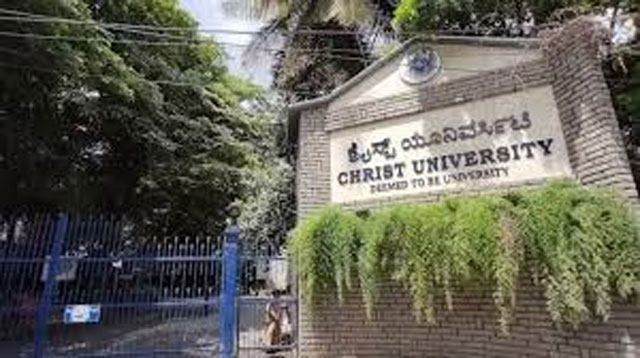
Bengaluru, Mar 11: The department of Economics at Christ (Deemed to be University), Bannerghatta Road campus, in collaboration with the Indian Council of Social Science Research – Southern Regional Centre (ICSSR-SRC), is organising a national seminar on March 13 titled 'GST reforms, livelihoods, and employment dynamics in Southern India: Implications for Vision Viksit Bharat'.
The seminar aims to bring together scholars, policymakers, and researchers to examine the broader socio-economic implications of the Goods and Services Tax on regional economies, labour markets, and livelihoods.
Since its introduction in 2017, the Goods and Services Tax has been one of the most significant structural economic reforms in India. By subsuming multiple indirect taxes into a unified framework, GST was designed to simplify the taxation system, promote ease of doing business, and create a unified national market. However, beyond taxation and compliance, GST has also influenced patterns of economic activity, business formalisation, state finances, and employment structures across sectors.
The seminar seeks to explore these dynamics with a particular focus on the experiences of Southern India, a region known for its diverse industrial clusters, growing service economy, and strong manufacturing base.
The seminar will feature an inaugural session followed by a panel discussion bringing together leading academics and policy experts. It will explore how GST reforms interact with labour markets, MSME growth, and fiscal federalism.
The panel will include Dr Rumki Majumdar, a macroeconomist and independent researcher, who will discuss GST reforms and MSME growth in southern manufacturing clusters. Her insights will focus on the opportunities and challenges that GST has created for micro, small and medium enterprises, particularly in regional industrial ecosystems.
Joining her is Dr Ramanjini, consultant (A&R) at the Fiscal Policy Institute, will present on State Finances of Karnataka and GST: Emerging Issues, offering perspectives on fiscal management, revenue trends, and policy considerations for state governments in the GST era.
Dr Rajeshwari U R, associate professor at Christ University, will speak on GST restructuring and its impact on states, examining how the evolving GST framework influences fiscal autonomy and revenue dynamics at the state level.
The panel will also feature Dr Muhammed Riyas, assistant professor at Symbiosis University, Bengaluru, contributing academic insights into GST and its evolving economic implications.
Through research presentations, expert dialogue, and policy discussions, the seminar seeks to provide a platform for critical engagement with contemporary economic reforms and their broader developmental consequences. By examining GST through the lenses of livelihoods, employment quality, and regional economic transformation, the seminar aims to contribute to the ongoing national discourse on inclusive growth and the vision of Viksit Bharat.