Daijiworld Media Network – New Delhi
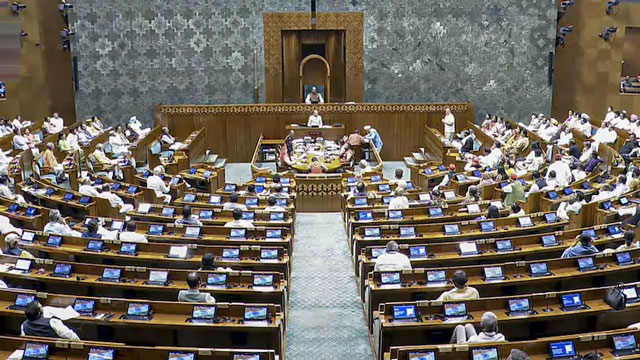
New Delhi, Apr 17: In a major legislative setback for the Union Government, the Lok Sabha on Friday, April 17, rejected the Constitution (131st Amendment) Bill, 2026. The Bill, which sought to increase the strength of the House and decouple women’s reservation from the upcoming Census, failed to secure the mandatory two-thirds majority required for a constitutional amendment.
While 298 members of the 528 present and voting supported the Bill, 230 members voted against it. Consequently, the Bill fell short of the 352 votes needed to pass. Following the defeat, union minister Kiren Rijiju withdrew the associated Delimitation Bill 2026 and the Union Territories Laws (Amendment) Bill 2026.
The proposal and its objectives
The 131st Amendment Bill proposed a massive expansion of the Lok Sabha from 543 to 850 seats. This included a maximum of 815 members representing States and up to 35 representing Union Territories.
Furthermore, the Bill aimed to amend Article 82 to allow delimitation based on 2011 Census figures, removing the current requirement to wait for the first Census conducted after 2026. This was intended to trigger the immediate implementation of the 33% women’s reservation law, which the government officially notified on April 16, 2026.
Opposition concerns and 'South' vs 'North' debate
The Bill faced stiff resistance from opposition parties over the use of 2011 Census data. Critics argued that increasing seats based on 15-year-old data would disproportionately favor northern states while reducing the relative representation of southern and north-eastern states that have successfully implemented population control measures.
The opposition also questioned the government’s haste, pointing out that the 2026-27 Census is already underway.
Impact on women’s reservation
The defeat of this Bill places the implementation of women's reservation back into a state of flux. While the Constitution (106th Amendment) Act, 2023, is now technically in force, its actual execution remains contingent on a fresh delimitation exercise.
Without the now-rejected amendment to Article 334A, the reservation can only be implemented after a delimitation based on the first Census conducted after the law was enacted—likely the 2027 Census results.