Daijiworld Media Network - Tehran
Tehran, Apr 19: In a sharp escalation of tensions in West Asia, Iran’s Islamic Revolutionary Guard Corps (IRGC) Navy has once again announced the closure of the strategically crucial Strait of Hormuz, warning that any vessel attempting to transit the waterway will be targeted.
The move comes less than 24 hours after Iran had reopened the strait, a development that had briefly raised hopes of easing tensions amid the ongoing conflict involving the United States and its ally Israel.
In a statement carried by Iran’s Student News Agency, the IRGC said the closure would remain in force until the US lifts its naval blockade on Iranian ports and vessels, which Tehran has termed a violation of the existing ceasefire understanding.
Issuing a stern warning, the IRGC Navy stated that no vessel should leave anchorage in the Persian Gulf or the Sea of Oman, and any attempt to approach the strait would be treated as cooperation with hostile forces and dealt with accordingly.
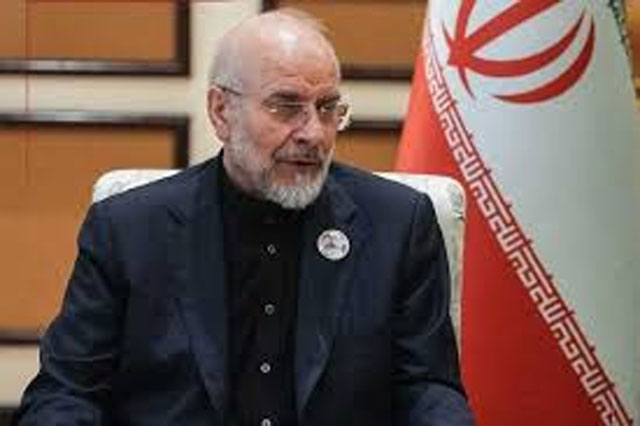
Iranian Parliament Speaker Mohammad Bagher Ghalibaf asserted that the Strait of Hormuz remains under Iran’s control, criticising the US blockade as an “ignorant decision.”
The renewed closure comes hours after Iran’s Foreign Minister Abbas Araghchi had declared the strait “completely open” for commercial shipping, leading to a brief resumption of maritime traffic with over a dozen vessels passing through the vital route, which handles nearly a fifth of global oil and gas shipments.
However, tensions quickly resurfaced, with reports indicating that Iranian gunboats fired at commercial vessels in the region. The United Kingdom Maritime Trade Operations (UKMTO) confirmed the incident, while India’s Ministry of External Affairs acknowledged that two Indian-flagged ships were involved in a shooting episode in the strait.
Merchant vessels in the region have also reportedly received radio warnings from Iranian forces, instructing them not to proceed towards the waterway.
Reacting strongly, US President Donald Trump said Iran would not be allowed to “blackmail” Washington by closing the strait, warning that the ceasefire could be scrapped if no agreement is reached before its deadline. He reiterated that the US naval blockade would continue “in full force.”
Meanwhile, Iran’s Supreme Leader Mojtaba Khamenei signalled a hardline stance, stating that Iranian forces were prepared to inflict “new bitter defeats” on their adversaries.
Observers note that the situation has effectively returned to a tense standoff, with both Iran and the United States enforcing rival blockades. The Strait of Hormuz has once again emerged as a critical flashpoint, with global concerns mounting over maritime security and energy supply disruptions.