Daijiworld Media Network – Tehran
Tehran, Apr 20: More than seven weeks after the reported killing of Iran’s former Supreme Leader Ali Khamenei in a US-Israel strike, his funeral and burial have yet to take place, raising questions over security concerns and internal stability in the country.
Following his death in February, citizens across Iran reportedly took to the streets to mourn, while the incident also triggered heightened tensions and retaliation against the United States and Israel.
The strike, part of a broader military action aimed at dismantling Iran’s nuclear programme, is said to have killed Khamenei along with several family members. His son, Mojtaba Khamenei, was subsequently appointed as the new Supreme Leader, a move seen as a departure from established norms in Iran.
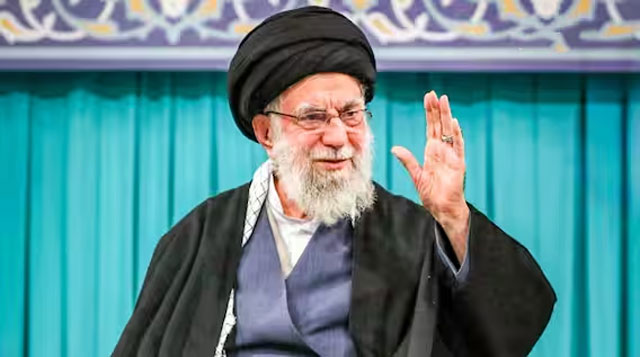
Experts suggest that security concerns are a key reason for the delay in holding the funeral. Authorities fear that a large public gathering could become a potential target for attacks, despite a ceasefire currently being in place.
Behnam Taleblu of the Foundation for Defense of Democracies told the New York Post that the regime may be reluctant to risk such an event.
“Simply put, the regime is too afraid and too weak to roll the dice,” he was quoted as saying.
He also noted concerns about possible internal unrest, suggesting that authorities may be wary of nationalist uprisings and the absence of Mojtaba Khamenei from public view since his appointment.
“It speaks volumes that the turnout for the funeral of the regime’s founding father in 1989 was such a massive affair, and yet one generation later his successor is still not able to have a funeral well over a month after his passing,” he added.
In contrast, the funeral of Ruhollah Khomeini in 1989 saw millions gather to pay their respects.
According to reports, Iranian authorities are considering Mashhad, Khamenei’s hometown near the Turkmenistan border, as a possible burial site. Its remote location is seen as offering both strategic security advantages and symbolic significance.