Daijiworld Media Network – Panaji
Panaji, Jun 24: Following the successful completion of the first phase of the nationwide tiger census, the Goa Forest Department is preparing to launch the crucial third phase of the exercise involving AI-enabled camera trapping to monitor tiger movement and wildlife activity across the state's forests.
The camera-trapping exercise, part of the All-India Tiger Estimation (AITE) 2026, is expected to begin after the monsoon season, tentatively in October.
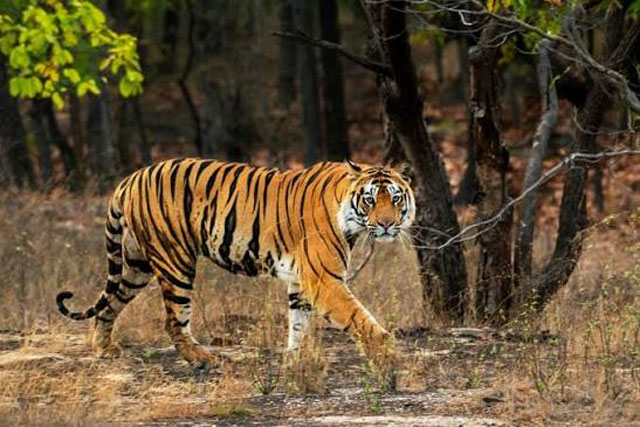
Regarded as India's largest wildlife census, the AITE follows a three-stage methodology combining ground surveys, satellite technology and artificial intelligence-based camera monitoring.
According to Forest Department sources, the first phase, conducted during April and May, involved extensive field surveys to collect indirect evidence of tiger presence. Survey teams documented pugmarks, claw and scratch marks, scat samples and prey remains, while also assessing vegetation density and recording human activity within forest areas.
"The online data of the first phase has been submitted to the Wildlife Institute of India (WII) and the National Tiger Conservation Authority (NTCA)," sources said.
The second phase focuses on satellite imagery and remote sensing to analyse forest cover, terrain, water sources and potential human encroachments. Officials said the WII and NTCA already possess much of the required data, which will help identify critical tiger habitats and wildlife corridors.
The third and most significant phase will involve the installation of camera traps at strategic locations such as animal trails, ridgelines and water bodies identified during the earlier surveys.
Each camera unit will remain operational for around 25 days, capturing images of wildlife movement. The photographs will then be analysed using specialised software capable of identifying individual tigers based on their unique stripe patterns.
"The camera trapping will commence post-monsoon. During monsoons, it is not feasible and will be undertaken in October," sources added.
Launched in 2006, the All India Tiger Estimation exercise has been conducted every four years, with previous assessments carried out in 2006, 2010, 2014, 2018 and 2022. Goa has participated in all five editions.
The most recent tiger estimation conducted in 2022 recorded five tigers in the state.
Officials believe the use of artificial intelligence and advanced monitoring technologies will further strengthen wildlife conservation efforts and provide a more accurate assessment of tiger populations and habitat health in Goa.