Daijiworld Media Network - Mumbai
Mumbai, Dec 21: As the new year approaches, shedding stubborn belly fat tops the resolution list for many. However, losing excess weight around the abdomen becomes increasingly challenging after the age of 30, even without any major changes in diet or lifestyle, says a health expert.
In an Instagram post dated December 21, Dr Saurabh Sethi, a California-based gastroenterologist trained at AIIMS, Harvard and Stanford Universities, explained that physiological changes after 30 make people more prone to accumulating belly fat.
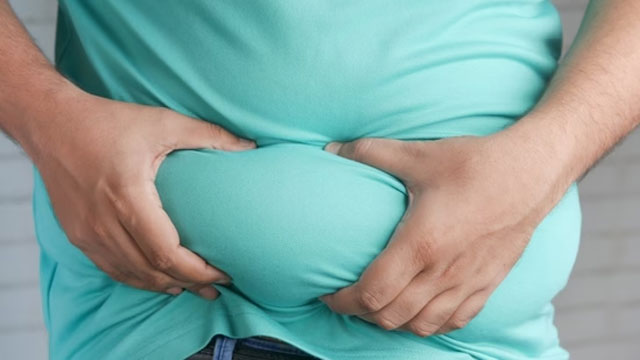
“The same foods lead to more belly fat. The same workouts give fewer results. Even small cheat days have a much bigger impact,” Dr Sethi noted, adding that this shift is not random but driven by biological changes in the body.
Why belly fat increases after 30
Loss of muscle mass:
After the age of 30, people naturally lose around 3–8 per cent of muscle mass per decade. With less muscle, the body burns fewer calories at rest. Dr Sethi pointed out that muscles are responsible for nearly 70–80 per cent of glucose disposal, and losing even one kilogram of muscle significantly reduces daily energy burn.
“When muscle mass drops, glucose stays in the blood longer and is more likely stored as abdominal fat,” he explained.
Declining insulin sensitivity:
Insulin sensitivity declines by about 4–5 per cent every decade with age. This means consuming the same amount of carbohydrates leads to higher sugar spikes, which accelerates fat storage, particularly around the waist.
Hormonal changes:
As people age beyond 30, levels of human growth hormone, testosterone and oestrogen decrease, while cortisol levels rise. “This combination favours deep abdominal fat storage,” Dr Sethi said.
As a result, visceral fat — the deep fat surrounding internal organs — accumulates faster than subcutaneous fat. This type of fat worsens insulin resistance and inflammation and is especially problematic for those with fatty liver, prediabetes, diabetes or high triglycerides.
Signs of a slowing metabolism
• Increase in belly size despite stable body weight
• Afternoon energy crashes
• Strong sugar cravings
• Bloating after consuming carbohydrates
• Fat gain in the upper abdomen
Tips to reduce belly fat
• Ensure adequate protein intake (1.2–1.6 grams per kg of body weight daily)
• Include strength training at least three times a week
• Walk daily to improve insulin sensitivity
• Get 7–8 hours of quality sleep every night