Media Release
Mangaluru, Jan 8: “Use technology without being used,” said Dr P V Bhandary, consultant psychiatrist and director of Dr A V Baliga Memorial Hospital, Udupi, while addressing the gathering at St Joseph’ s Seminary, Mangaluru during the annual lecture on 'Being Human in a Digital Age: Mind, Morality, and Public Life' organised by St Joseph’s Institute of Philosophy (SJIP), in collaboration with the Chair in Christianity, (CIC), on January 8. The session was moderated by Dr Sunil D’Souza, head of the chair in Christianity, Mangalore University.
The event commenced with a prayer, invoking divine guidance and blessings, followed by the recitation of the preamble to the Indian Constitution. This was followed by the presentation of a video. Austin Vas, the student coordinator of the academy, then extended a warm welcome to the guests and the gathering.
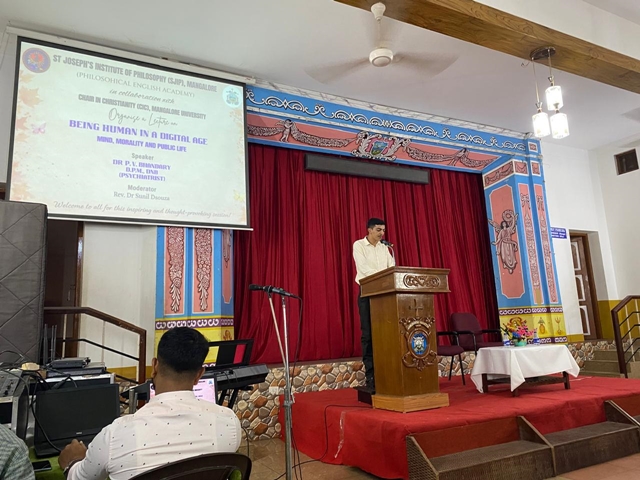
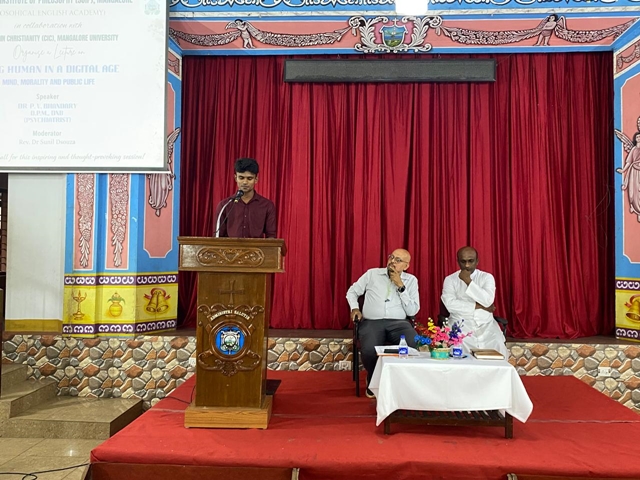
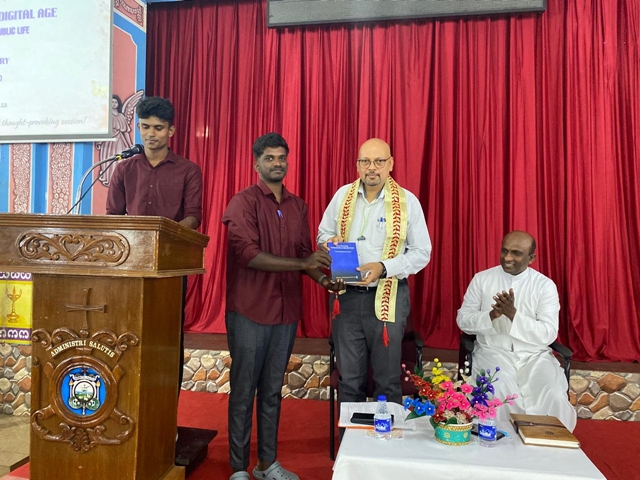
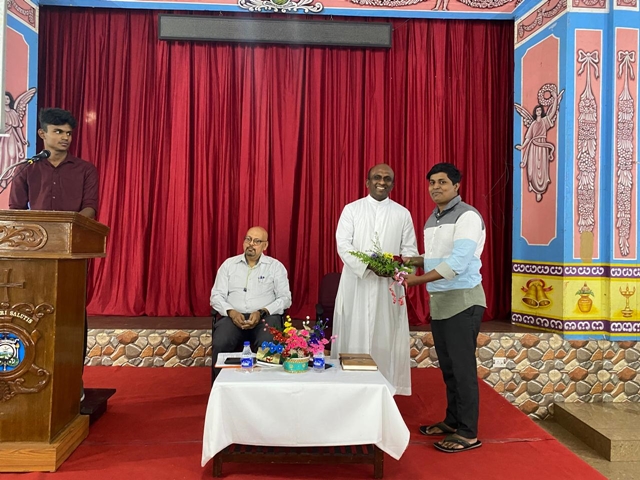
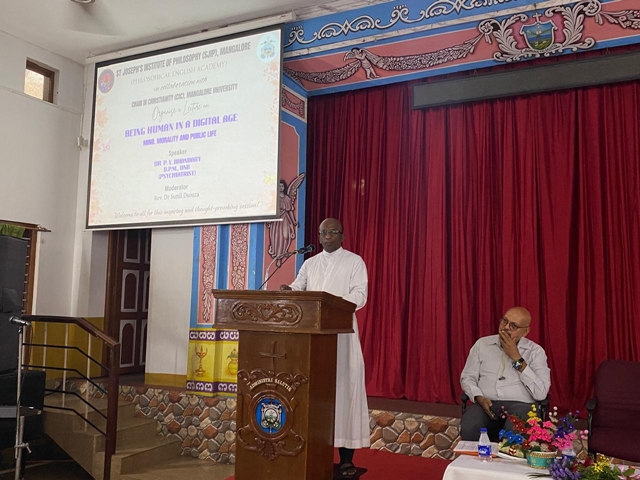
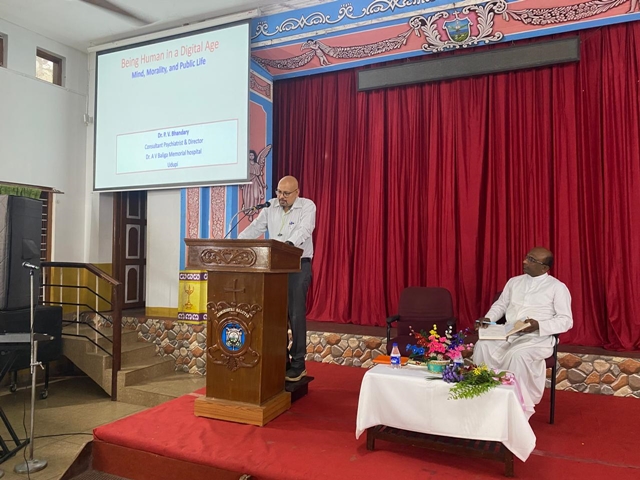
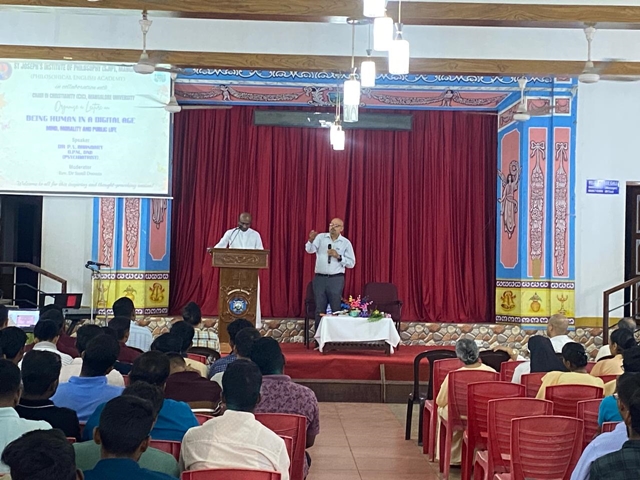
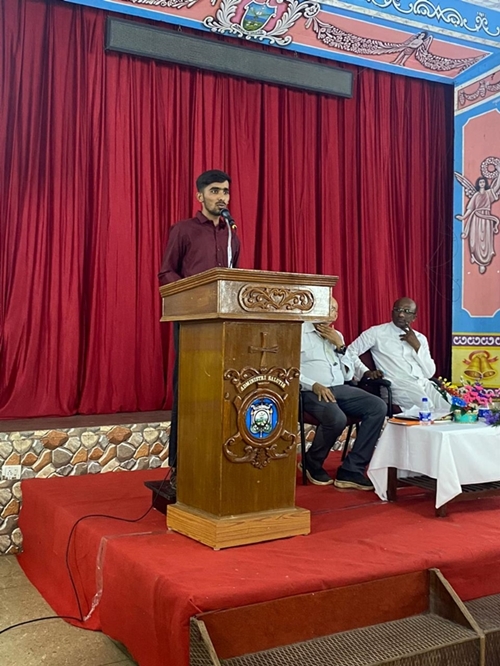
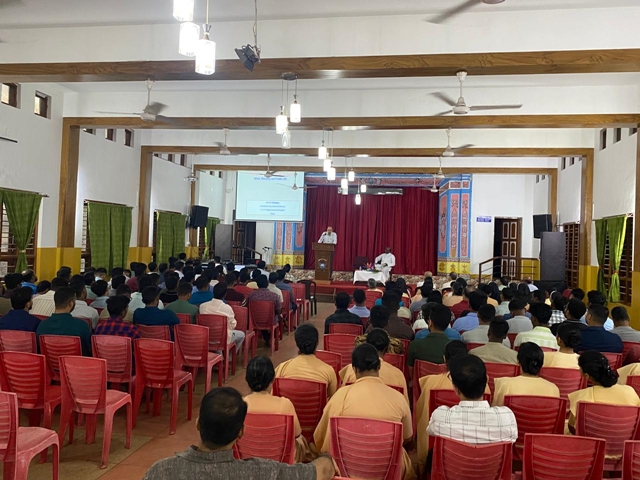
Dr Bhandary reminded the audience that attention shapes the self; when attention becomes fragmented, the self too risks fragmentation. He observed that the overuse of social media has led to a growing phenomenon of compassion fatigue in contemporary society. He sensitised the audience to the growing influence of digital technology on modern human life, especially its impact on the human mind. He explained how continuous digital exposure affects brain plasticity and leads to constant stimulation, gradually reducing the capacity for deep focus and reflection.
Quoting British Mathematician and data science entrepreneur Clive Humby, he remarked, “Data is the new oil” and warned against the rise of various digital addictions. He urged the audience to engage with media responsibly, exercising discernment and civility, and emphasised that validity is a more significant value than virality.
Dr Bhandary stressed the practice of presence—through prayer, silence, and attentive listening—is the sine qua non of our times. Emphasising the value of authentic human relationships, he called for strengthening real social connections over superficial digital friendships, reminding the audience of the need to remain truly human in an increasingly digital age.
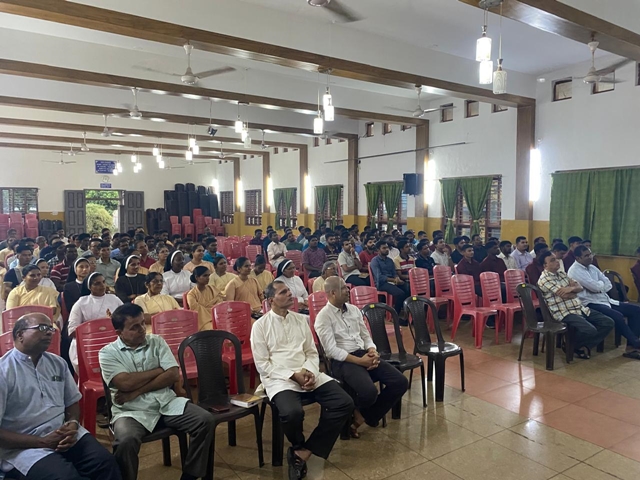
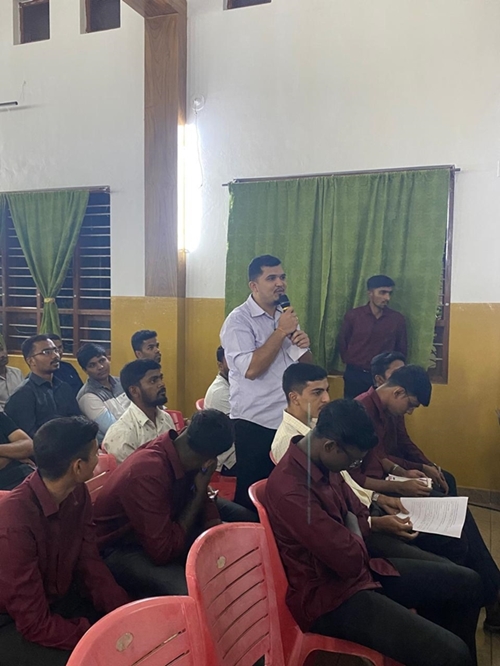
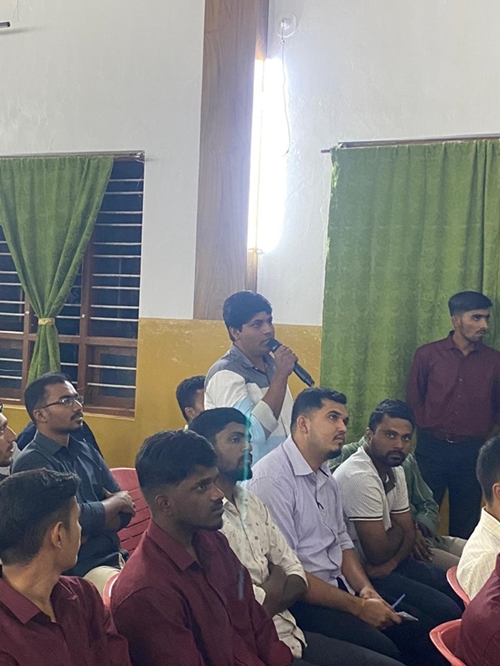
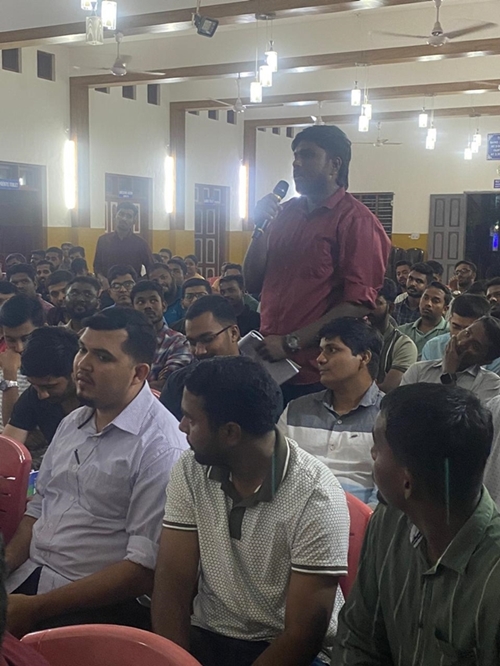
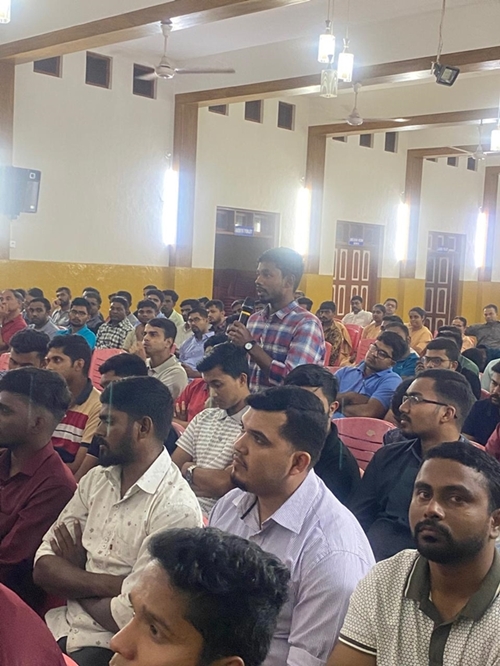
The session concluded with an engaging interaction, during which participants actively raised questions and shared reflections with the speaker. Dr Sunil D’Souza, the moderator, offered the concluding remarks, succinctly highlighting the key insights of the discussion. The event witnessed the active presence of Dr Rajesh Rosario, rector of the seminary; Dr Ivan D’Souza, director of SJIP; along with staff and students of St Joseph’s Institutes of Philosophy and Theology, and brothers, sisters, and lay participants from nearby institutions.
Joyal Crasta, a student of philosophy, delivered the vote of thanks. The programme concluded with the singing of the Seminary anthem. The event was smoothly compered by Denson D’Silva, a student of philosophy.
A distinctive feature of the academy’s activities leading up to this session was the presentation of research papers by philosophy students on contemporary philosophical and societal concerns. These monthly presentations included:
Team Ethos: A Philosophical Analysis on Gender Performance in the Feminism of Judith Butler;
Team Logos: Nature, Women, and Resistance: Ecofeminist Philosophical Insights from Vandana Shiva’s Staying Alive;
Team Kairos: A Feministic View of Abjection in Religion, Culture and Society According to Julia Kristeva;
Team Pathos: Re-reading Simone de Beauvoir’s Writings on Gender Equality;
Team Mythos: The Invention of Women: Reimagining Gender through the Yoruba Perspective.
This initiative highlights the emphasis of SJIP and CIC on integrating academic inquiry with real-world relevance. By encouraging students to critically engage with philosophical thought and contemporary issues, the Philosophical English Academy nurtures intellectual depth, social awareness, and leadership qualities essential for today’s changing world.