Daijiworld Media Network - Panaji
Panaji, Jan 11: Justice Valmiki Menezes of the Bombay High Court on Saturday urged judicial officers to ensure equal opportunities for persons with disabilities when they approach courts in pursuit of justice.
Addressing a sensitisation and awareness session on the Rights of Persons with Disabilities Act, 2016, organised for judicial officers, advocates, public prosecutors and assistant public prosecutors at the High Court, Justice Menezes highlighted gaps in the existing judicial system.
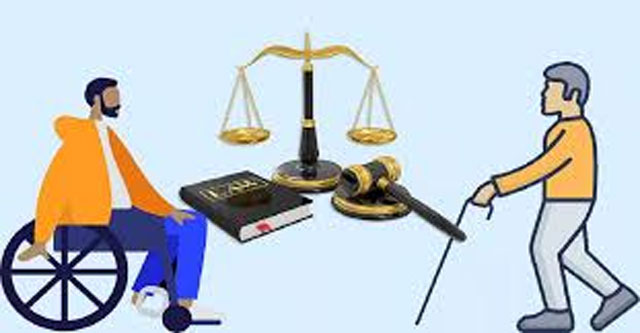
“We came across many cases at the district level where witnesses were mute or visually impaired, and our courts do not really have the wherewithal to ensure that their depositions and their stories are recorded using the aids required,” he said. He added that court registries also lacked personnel trained to communicate effectively with persons with disabilities. “These are skills that we really have to learn,” he remarked.
Justice Menezes stressed the need to train adequate numbers of personnel at district and taluka levels to safeguard the rights of persons with disabilities. “They must have the same opportunities as all other witnesses, accused and lawyers appearing before courts. The objective of this session is not merely sensitisation but effective implementation of Section 12 of the Rights of Persons with Disabilities Act, 2016, which deals with access to justice,” he said.
State Commissioner for Persons with Disabilities Guruprasad Pawaskar, speaking at the event, said that for decades legal systems and government institutions viewed disability through the prism of medical defect and social charity. “With the enactment of the 2016 Act, we have moved to a rights-based model. The responsibility of the judiciary and law officers is not just to interpret the law but to ensure that the social model of disability becomes an integral part of the judicial system,” he said.
Pawaskar noted that the 2016 Act recognises 21 categories of disabilities, including blood disorders such as thalassaemia, acid attack survivors and dwarfism, as against the seven disabilities recognised under the earlier 1995 Act.