Daijiworld Media Network - Mumbai
Mumbai, Feb 19: Aaditya Thackeray has criticised the government’s climate commitments as mere “sweet talking,” alleging a stark contrast between public climate pledges and recent environmental clearances across the country.
In a post on X during the ongoing Mumbai Climate Week, Thackeray pointed to the clearance granted to the Great Nicobar Project by the National Green Tribunal (NGT), stating that the project “will destroy an entire local ecosystem.”
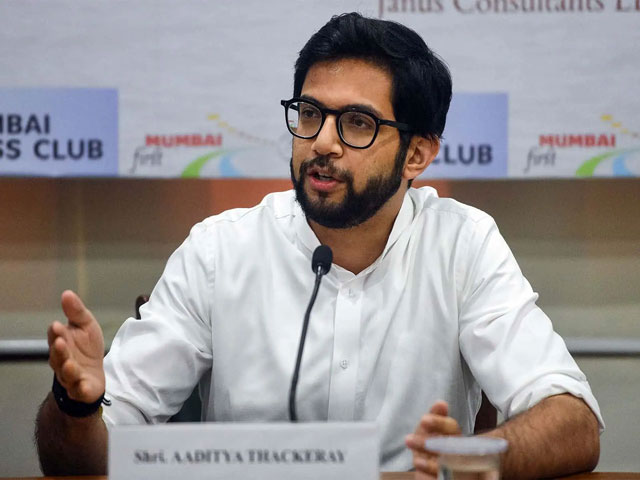
“While all the sweet talking, formal MoUs and government chatter can happen at @Mumbai_Climate, where global agencies and partners have been invited, the Great Nicobar Project, that will destroy an entire local ecosystem, has been cleared by the NGT, which is supposed to protect the environment,” he wrote.
Thackeray also flagged what he termed as ongoing environmental threats in various regions. He claimed the Aravali mountain range continues to face risks, similar to the Himalayan region.
He further alleged that the Maharashtra State Board of Wildlife is permitting mining activities near the Tadoba Andhari Tiger Reserve and Ghodazari Wildlife Sanctuary.
Referring to urban deforestation, Thackeray highlighted tree felling in Ajni Vann in Nagpur, describing it as a lush green area with thousands of old trees. He also alleged that the Brihanmumbai Municipal Corporation (BMC) has moved ahead with plans to cut 45,000 mangrove trees.
“The joke is, they will do compensatory afforestation in Chandrapur, where mines are being opened — so the trees felled there will be compensated on another planet, maybe,” he remarked sarcastically.
He further alleged that rampant deforestation is being permitted by municipal corporations for builders in cities, questioning the government’s seriousness about climate commitments.
“It’s cute to see the government sign MoUs on ‘Urban Heat’ and City Climate roadmaps and forcing CSR down this road. All the jargon is great, all the talk is great — only if the government actually meant what it said at the climate week,” he added.
Mumbai Climate Week was inaugurated by Maharashtra Chief Minister Devendra Fadnavis, who emphasised Mumbai’s potential role as a climate finance hub for the Global South.
Addressing global leaders, innovators, philanthropists and youth representatives, Fadnavis described the event as “India’s first platform dedicated to accelerating climate action at scale.”
“There is no better city to host this conversation than Mumbai, a city that has remained resilient through its glorious history,” he said.
Highlighting the real-world impact of climate change, Fadnavis noted, “When Mumbai experiences extreme rainfall, it is not a mere statistic. It is trains halted, homes flooded, businesses disrupted, and livelihoods interrupted. When heat waves intensify, it is not a graph on a presentation; it is construction workers, street vendors, and farmers facing real hardship.”
The remarks underscore the growing political debate over balancing climate action commitments with infrastructure and development projects in the state and across the country.