Daijiworld Media Network - Kolkata
Kolkata, Apr 12: The Trinamool Congress and the Bharatiya Janata Party have, through their election manifestos for the West Bengal polls, made it clear that both are vying for the same key voter groups—women, youth and welfare beneficiaries—while adopting sharply contrasting approaches on identity, minorities and nationalism.
Chief Minister Mamata Banerjee is banking on a social coalition of women, minorities and SC-ST voters that has sustained the TMC’s dominance since 2011. The BJP, on the other hand, is attempting to dismantle this base through promises of enhanced financial aid, emphasis on Bengali pride, and pledges to implement the Uniform Civil Code and grant citizenship to Hindu refugees, alongside its strong anti-infiltration stance.
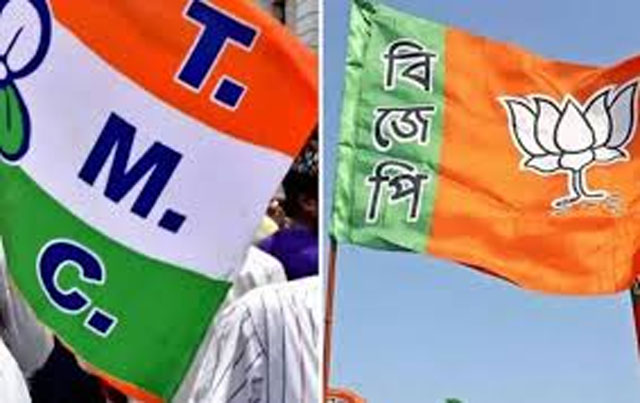
While the Left Front and the Indian National Congress have also released their manifestos, their focus appears to be on regaining political relevance rather than directly challenging for power. Both have centred their campaigns on employment generation, industrial growth and anti-incumbency sentiment.
Political analyst Biswanath Chakraborty said the manifestos reflect clear ideological positioning, with TMC seeking to retain its support base, BJP aiming to fracture it, and Left-Congress attempting to reassert their presence.
The TMC has doubled down on welfare schemes, particularly targeting women through proposals such as increasing financial assistance under Lakshmir Bhandar. The party views women voters as its strongest support base and has framed the election as a battle to protect social harmony.
The BJP has responded with aggressive counter-promises. Union Home Minister Amit Shah announced financial assistance of ?3,000 per month for women, free bus travel, reservation in government jobs and enhanced safety measures, including dedicated women police stations.
The BJP is also seeking to capitalise on public anger over issues related to women’s safety, citing incidents such as those in RG Kar and Sandeshkhali, and projecting the need for “security” and “fear-free living.”
Minority outreach remains central to TMC’s strategy, particularly among Muslims who form a significant portion of the electorate. Promises related to Waqf properties, education and skill development aim to reassure this voter base.
In contrast, the BJP has placed polarisation at the core of its campaign, with commitments to enforce the Uniform Civil Code, curb infiltration and introduce laws targeting “Love Jihad” and “Land Jihad,” in a bid to consolidate Hindu votes.
At the same time, the BJP has sought to shed its image as an outsider party by embracing regional identity, promising initiatives linked to Bengali culture and heritage.
Meanwhile, the Left Front and Congress have attempted to shift the focus away from identity politics to employment and economic issues. The Left has promised job guarantees and industrial expansion, while Congress has proposed welfare measures alongside improved governance.
With polling approaching, the contest in West Bengal is shaping up as a strategic battle where welfare schemes, identity narratives and targeted promises are being deployed to influence distinct voter segments and reshape electoral equations.