Daijiworld Media Network - Panaji
Panaji, Apr 12: Scientists from the National Institute of Oceanography in Goa have found evidence that long-term climate change and shifts in sea levels are influencing underwater volcanic activity along mid-ocean ridges.
The study focused on the Carlsberg Ridge, a slow-spreading underwater mountain range where tectonic plates move apart, allowing magma to rise and form volcanic systems beneath the sea.
Researchers analysed sediment cores containing iron and manganese deposits, which act as chemical recorders of past hydrothermal activity. By studying lead isotopes in these deposits, they were able to distinguish between material originating from Earth’s interior and that from atmospheric sources.
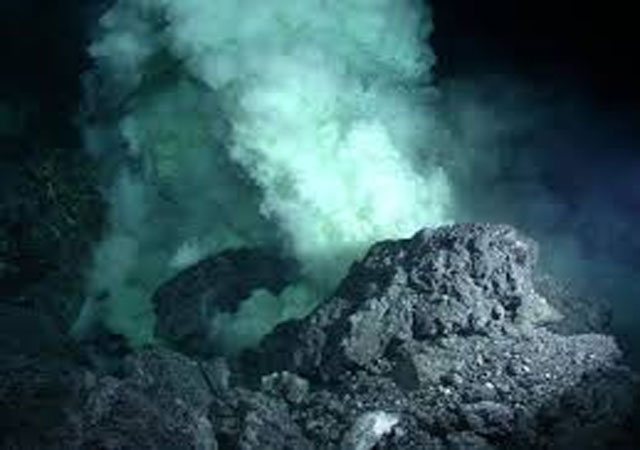
The findings revealed a strong link between past ice ages and volcanic activity over the last 49,000 years. During glacial periods, when sea levels were lower, reduced pressure on the ocean floor led to increased volcanic activity and higher release of heat and carbon dioxide.
The study identified two key mechanisms behind this phenomenon—delayed melt-driven bursts and rapid crustal cracking—both triggered by changes in sea level.
Scientists noted that hydrothermal systems at such slow-spreading ridges are highly sensitive to global climate variations, acting as both indicators of past climatic changes and contributors to ocean chemistry.
These underwater systems also release essential trace metals such as cobalt, nickel and chromium into the deep ocean, potentially influencing marine ecosystems and nutrient cycles.
The research highlights a complex interaction between climate change, sea-level variation and geological processes beneath the ocean floor.