Daijiworld Media Network - Hyderabad
Hyderabad, May 5: Asaduddin Owaisi on Tuesday urged Muslims in India to develop independent political leadership, saying reliance on “so-called secular parties” has failed to protect their interests or stop the rise of the BJP.
Reacting to recent Assembly election outcomes in states including West Bengal and Assam, the AIMIM chief said Muslims should reassess their political choices and the value of their vote.
“You are casting your vote in favour of so-called secular parties that are not secular. They have failed to stop the BJP,” he told reporters, arguing that repeated electoral support for such parties has not led to meaningful development or reduced discrimination.
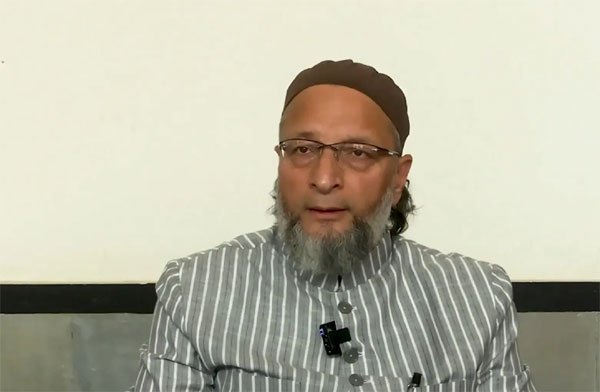
Owaisi said that despite voting for different parties in states like Maharashtra, Bihar, Delhi, and West Bengal, the BJP has continued to win elections. He added that this reflects the failure of opposition formations to present an effective alternative.
He also criticised several regional and national leaders, including Arvind Kejriwal, Uddhav Thackeray, and the former Nationalist Congress Party, alleging they adopted “soft Hindutva” politics. He also accused Mamata Banerjee and the All India Trinamool Congress of treating Muslims primarily as a vote bank without addressing their socio-economic concerns.
According to him, Muslims in West Bengal, despite being numerically significant in several constituencies, have not seen proportional political empowerment. He said the community must consider forming its own leadership to ensure representation in legislatures and local bodies.
Owaisi also pointed to electoral patterns in West Bengal and Assam, claiming that anti-incumbency, corruption allegations, and dissatisfaction among Muslim voters contributed to the outcomes. He said that in Assam, the BJP still won despite displacement-related issues affecting communities.
He thanked voters who supported AIMIM candidates in West Bengal but acknowledged that the party did not win seats. However, he expressed confidence in the party’s future prospects in regions such as Malda and Murshidabad.
On electoral processes, he criticised the Special Intensive Revision (SIR) exercise, questioning its implementation and alleging it affected voter lists. He advised vigilance regarding electoral roll changes but opposed linking such exercises to citizenship issues.
Owaisi also urged political awareness among voters, stressing that long-term representation and accountability require stronger independent leadership rather than reliance on established parties.