Daijiworld Media Network - New Delhi
New Delhi, May 7: The Supreme Court of India on Thursday voiced concern over increasing judicial intervention in matters of religion, observing that frequent constitutional challenges to religious practices could disturb India’s long-standing civilisational and cultural framework.
A nine-judge Constitution Bench headed by Chief Justice of India Surya Kant was hearing the Sabarimala reference case, which raises wider constitutional questions relating to religious freedom, denominational rights under Articles 25 and 26, and the extent to which courts can examine religious practices.
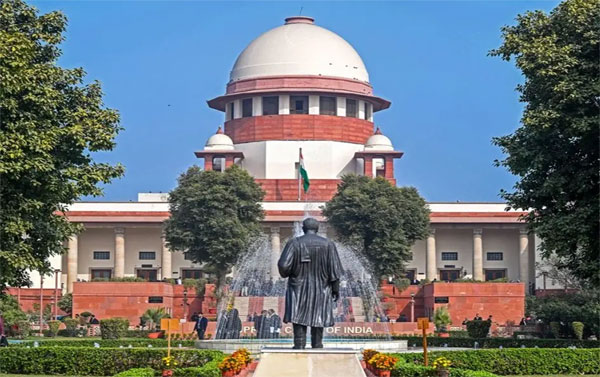
During the proceedings, Justice B. V. Nagarathna remarked that religion is deeply embedded in Indian society and warned against courts routinely entertaining petitions challenging religious customs and traditions.
She observed that unchecked litigation over matters of faith could lead to endless disputes over temple access, religious rights, and ritual practices, potentially affecting the social and cultural continuity of Indian civilisation.
Justice Nagarathna further noted that India’s identity as a civilisation is rooted in its diversity and plurality, with religion serving as a constant thread connecting communities across generations. She said the Bench was aware that its eventual ruling could have far-reaching implications beyond individual legal disputes.
Echoing similar concerns, Justice M. M. Sundresh cautioned that excessive judicial scrutiny of religious matters could destabilise faith systems themselves, remarking that unrestricted challenges might lead to every aspect of religion being questioned.
The court was hearing submissions from senior advocate Raju Ramachandran, representing the Central Board of Dawoodi Bohra Community. The challenge concerns the authority of the Dawoodi Bohra religious head, known as the Dai, to excommunicate members of the community.
Ramachandran argued that excommunication had allegedly been exercised arbitrarily in certain instances, resulting in severe social exclusion and what he described as “civil death” for affected individuals. He contended that such actions violate fundamental rights guaranteed under Articles 21 and 25 of the Constitution.
According to him, excommunication impacts not only religious participation but also social and secular aspects of life, including marriage, employment opportunities, and access to community institutions.
However, members of the Constitution Bench repeatedly questioned the extent to which constitutional courts should intervene in internal disputes within religious denominations.
Justice Ahsanuddin Amanullah observed that if courts begin applying constitutional proportionality tests to every issue involving religion, the protections granted to religious denominations under Article 26 could become weakened.
The Bench also examined issues related to female genital mutilation within the Dawoodi Bohra community following arguments presented by senior advocate Siddharth Luthra, who argued that the practice violates bodily autonomy, dignity, and criminal law protections.
During the hearing, Justice Amanullah strongly objected to comparisons between female genital mutilation and male circumcision, stating that the two practices were fundamentally different. Justice Joymalya Bagchi also observed that male circumcision could not be equated with procedures involving the clitoris.
The Constitution Bench, which also includes Justices Aravind Kumar, A.G. Masih, Prasanna B. Varale, and R. Mahadevan, will continue hearing the matter next week.