Daijiworld Media Network - Washington
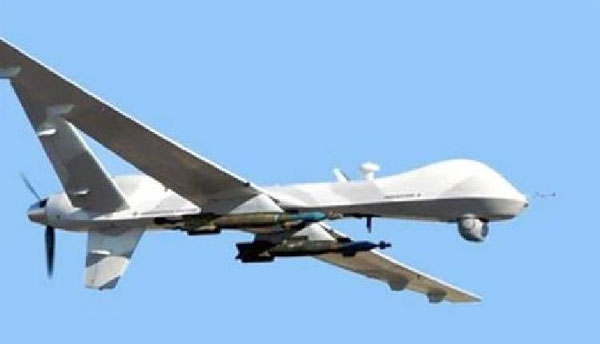
Washington, May 14: The United States Air Force has begun urgently evaluating a successor to the MQ-9 Reaper drone after recent combat operations highlighted both the strengths and weaknesses of the unmanned platform, a move being closely monitored by India following its purchase of MQ-9B drones from the US.
Senior Air Force officials informed lawmakers during a Senate Armed Services Subcommittee hearing that evolving battlefield conditions in regions such as the Middle East and Ukraine are reshaping the Pentagon’s approach toward unmanned warfare, including how drones are designed, manufactured, and deployed.
The discussions come amid the rapid expansion of drone warfare globally and increasing demand for long-range intelligence, surveillance, and strike capabilities, particularly in the Indo-Pacific region.
General David Tabor, Deputy Chief of Staff for Plans and Programmes, said the Air Force was carefully assessing the operational performance of MQ-9 drones after recent missions under “Operation Epic Fury.”
“We are monitoring MQ-9s very, very closely in light of what has occurred over the last several weeks in Operation Epic Fury,” Tabor told lawmakers.
Despite combat attrition, Tabor said the platform had continued to prove its operational importance.
“The impact that it has had in spite of that attrition has really been remarkable,” he stated.
According to officials, the US Air Force currently operates around 135 MQ-9 aircraft while sustaining 56 active combat lines worldwide.
At the same time, the Air Force is exploring options both to replenish existing MQ-9 fleets and to accelerate development of a future-generation unmanned combat system.
“We’re looking at options to buy back as many of the MQ-9As as we possibly can right now,” Tabor said.
Lieutenant General Christopher Niemi indicated that the next generation of drones would likely be more affordable, modular, and easier to produce at scale compared to the current MQ-9 fleet.
“The MQ-9, depending on what sensors are on that, can cost up to $50 million a copy,” Niemi said. “By getting something that’s more modular, we think we could take advantage of an opportunity.”
He added that future systems are expected to operate effectively in high-threat combat environments while allowing removable high-cost components to reduce operational and replacement expenses.
Officials also revealed that the Air Force has already issued a request for information to defence manufacturers regarding future unmanned systems, receiving strong industry interest.
Lieutenant General Luke Cropsey said more than 50 responses had been submitted by defence companies.
“There is a burgeoning interest across the broader defence industrial base in what comes next,” Cropsey told senators.
A major focus of the hearing was the rapidly evolving drone warfare landscape in Ukraine, where inexpensive unmanned systems are increasingly shaping battlefield outcomes.
Niemi noted that Ukraine is now producing nearly one million drones every month, underscoring the growing importance of mass-produced, low-cost unmanned technologies in modern warfare.
He said the US Air Force is now prioritising “affordable mass munitions” and systems capable of rapid large-scale production.
The developments hold particular significance for India, which recently signed a major agreement with the United States to acquire MQ-9B Predator drones for all three branches of its armed forces.
India views the drones as critical assets for maritime surveillance, intelligence gathering, and border monitoring, especially amid rising strategic challenges in the Indo-Pacific and along contested frontiers.
The MQ-9 drone family has been one of the most widely used unmanned combat platforms in the world over the past two decades, supporting intelligence, surveillance, reconnaissance, and precision strike missions. However, recent conflicts have also exposed the vulnerability of large drones in heavily defended airspace, pushing militaries worldwide toward developing cheaper, more survivable, and AI-enabled unmanned systems.