Daijiworld Media Network - Addis Ababa
Addis Ababa, May 23: The World Health Organization (WHO) has elevated the public health risk posed by the ongoing Ebola outbreak in the Democratic Republic of Congo (DRC), warning that the rapidly spreading virus now represents a “very high” threat at the national level.
WHO Director-General Tedros Adhanom Ghebreyesus announced the revised assessment during a press briefing on Friday, stating that the risk level has been upgraded to very high within the DRC, high at the regional level, and low globally.
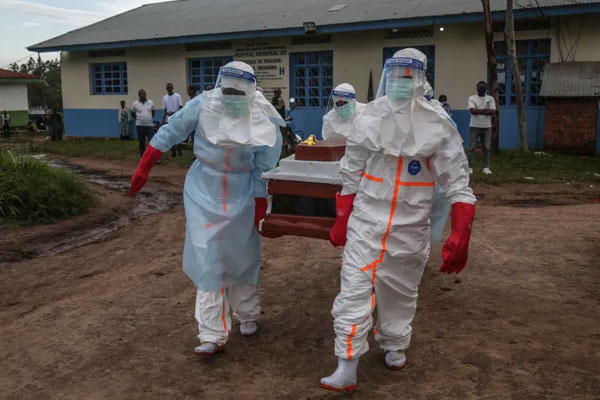
As concerns grow over the outbreak’s expansion, the Africa Centres for Disease Control and Prevention called for stronger regional cooperation and urgent international support to contain the disease in both the DRC and neighbouring Uganda.
In a statement, the African Union’s public health agency stressed that rapid coordination, immediate action and sustained assistance are essential to support frontline workers and communities most affected by the outbreak.
The Africa CDC announced emergency funding of 1 million US dollars to reinforce response operations and confirmed the deployment of an eight-member multidisciplinary emergency team to Bunia in Ituri Province, where the outbreak was first detected.
The agency also welcomed South Africa’s contribution of 2.5 million US dollars toward Ebola response efforts and praised healthcare workers battling the outbreak for their dedication and continued service under difficult conditions.
To strengthen regional preparedness, the Africa CDC said it is organising a high-level cross-border coordination meeting involving Uganda, the DRC and South Sudan. The discussions aim to improve surveillance, information sharing and emergency response systems across affected border regions.
According to figures released by DRC Health Minister Roger Kamba, the country has recorded 626 suspected Ebola cases and 159 probable deaths since officially declaring its 17th Ebola outbreak on May 15.
Initially concentrated in Ituri Province, the outbreak has now spread to North Kivu and South Kivu provinces. Authorities have also confirmed two Ebola cases in neighbouring Uganda, increasing fears of wider regional transmission.
Ebola Virus Disease is one of the world’s deadliest infectious diseases and spreads through direct contact with infected bodily fluids. Symptoms typically include fever, vomiting, diarrhoea, severe weakness and pain, while advanced infections can lead to internal and external bleeding.
According to the WHO, Ebola fatality rates can range between 50 percent and 89 percent depending on the virus strain and the speed of medical intervention. Health authorities continue to urge early detection, isolation of patients and coordinated international action to prevent further spread of the outbreak.