Daijiworld Media Network - Panaji
Panaji, May 24: Aquaculture can play a crucial role in boosting fish stocks, strengthening seafood supply and improving the health of water bodies in Goa, scientist Nandkumar Kamat said during an event marking the International Day for Biological Diversity 2026.
Speaking at a panel discussion organised by the Goa State Biodiversity Board on operationalising the Goa State Biodiversity Strategy and Action Plan, Kamat said fish populations in the coastal state are declining and require urgent conservation measures.
“We have to document current fish populations, understand how they survive and identify the stressors affecting them. Once we understand these stress factors, we can prepare an action plan,” he said.
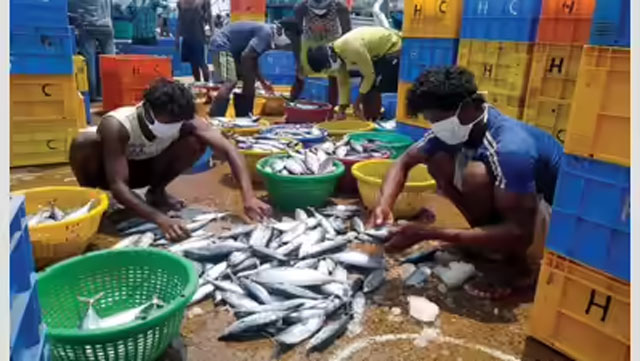
Kamat noted that Goa, where fish is a staple part of the local diet, is facing a widening demand-supply gap in seafood availability.
“Today, even if you are willing to spend Rs 500, a kg of fish may not be available. One way to increase fish production is by culturing and propagating green mussels,” he said.
Scientist Baban Ingole from the National Institute of Oceanography stressed the need for baseline ecological data to support biodiversity conservation efforts.
He said that before the Biodiversity Act came into force in 2002, there was inadequate mapping of mountains, hills, water bodies and ecosystems in the state.
“Until 2023, we had little information on the populations of butterflies, birds, fish and even leopards. Such data is essential, and solutions cannot be framed without preliminary studies,” Ingole said.
The experts highlighted the importance of scientific research, biodiversity documentation and sustainable aquaculture practices to address Goa’s environmental and food security challenges.