Daijiworld Media Network - Kinshasa
Kinshasa, May 27: The Ebola outbreak in the Democratic Republic of the Congo (DR Congo) continues to expand, with health authorities warning that the epidemic is still in its early stages as infections and suspected deaths steadily increase.
Health Minister Roger Kamba said officials have identified nearly 1,000 suspected cases in affected regions, of which 101 have been laboratory confirmed so far.
According to preliminary assessments, between 200 and 220 deaths are believed to be linked to the outbreak, although only 17 fatalities have been officially confirmed through testing.
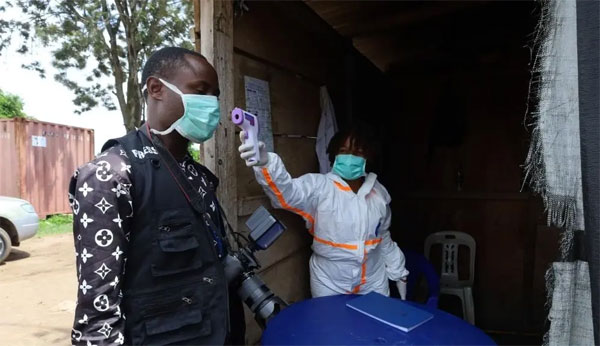
“We are still at the beginning of an epidemic,” Kamba said during a press briefing, noting that the scale and duration of the outbreak would depend largely on the effectiveness of emergency response measures. Authorities are currently preparing for an intensive response operation expected to continue for four to six months.
The current outbreak is being driven by the Bundibugyo strain of Ebola, a less deadly but still dangerous variant compared to the more lethal Zaire strain. Officials noted that there is currently no approved vaccine or targeted treatment specifically available for the Bundibugyo strain.
To curb the spread of the virus, health teams are focusing on surveillance, rapid testing, patient isolation, contact tracing, community awareness campaigns, and safe burial practices.
As part of containment efforts, the government has suspended civilian passenger flights to and from Bunia, the capital of Ituri Province and the centre of the outbreak. Humanitarian and emergency flights, however, continue to operate.
Kamba also indicated that the virus may have been circulating before the outbreak was officially declared on May 15, pointing to Ebola’s incubation period, which can extend up to 21 days. Investigators are still attempting to identify the outbreak’s initial source, commonly referred to as “patient zero.”
Earlier, the World Health Organization (WHO) confirmed that one Ebola patient in the eastern city of Goma is currently recovering while receiving treatment at a local hospital.
Anne Ancia, the WHO’s acting representative in DR Congo, stated during a recent visit to Goma that the patient’s condition was “very positive” and that close contacts were being regularly monitored.
She added that health authorities are strengthening surveillance systems, treatment facilities, contact tracing operations, and community engagement initiatives in response to the outbreak caused by the rare Bundibugyo strain.
The outbreak has raised renewed concerns in DR Congo, a country that has faced multiple Ebola epidemics in recent decades, placing immense pressure on its healthcare infrastructure and emergency response systems.