Media Release
Mangaluru, Jun 9: In an era where environmental challenges are becoming increasingly complex, fostering ecological awareness among young people is essential for building a sustainable future. Recognizing the importance of environmental stewardship and the need to cultivate a deeper appreciation for nature, St Aloysius Pre-University College organized an awareness talk on 'Our coastal ecosystems - Conservation of its flora and fauna' as part of the Value Education programme and in observance of World Environment Day. The programme was held at Loyola Hall and was conducted by Glavin Thomas Rodrigues, assistant professor, department of zoology, St Aloysius (Deemed to be University), Mangaluru.
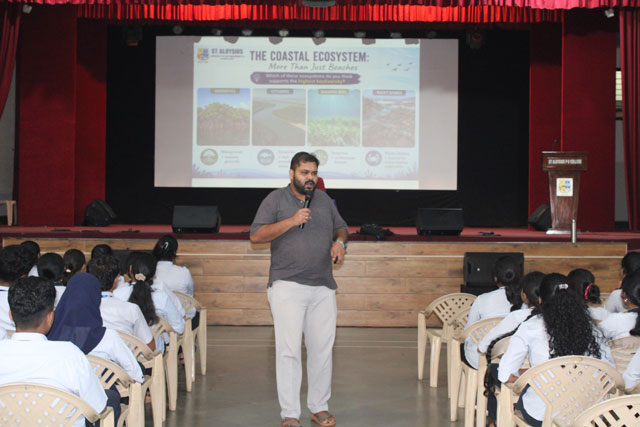
The session provided students with valuable insights into the rich biodiversity of coastal ecosystems and the vital role they play in maintaining ecological balance. Through an engaging and interactive presentation, Rodrigues highlighted the interconnectedness of various components of coastal environments and emphasized the need to understand and conserve them for future generations.
Drawing from his expertise in zoology and environmental conservation, he elaborated on the significance of ecosystems such as mangroves and estuaries, describing them as some of the most productive and ecologically important habitats on Earth. He explained how mangroves serve as natural shields against coastal erosion, storms, and tidal surges while providing shelter and breeding grounds for a wide variety of aquatic species. Estuaries, where freshwater meets the sea, were presented as vital nurseries that support the growth and survival of numerous marine organisms.
The resource person also shed light on the diverse marine fauna that inhabit coastal regions, including turtles, fishes, shellfishes, hermit crabs, dolphins, and migratory fish species. He explained how each of these organisms contributes uniquely to maintaining ecological equilibrium and sustaining marine biodiversity. Particular emphasis was placed on migratory species, whose movements support genetic diversity and strengthen aquatic food webs.
One of the key takeaways from the session was the understanding that every component of an ecosystem, whether living or non-living, has an important role to play. Rodrigues illustrated how even shells contribute to nutrient cycling, habitat formation, and the overall functioning of coastal environments. Through such examples, students were encouraged to look beyond the obvious and appreciate the intricate relationships that sustain life in marine ecosystems.
The interactive nature of the programme fostered active student participation and meaningful discussion. The session not only enhanced students’ knowledge of coastal biodiversity but also encouraged them to reflect on the impact of human activities on the environment. By highlighting the importance of conservation and responsible environmental practices, the talk inspired students to become more conscious and committed custodians of nature.
The programme proved to be both informative and inspiring, leaving students with a greater understanding of the need to protect and preserve coastal ecosystems. It reinforced the message that environmental conservation is a shared responsibility and that informed, responsible actions today can help safeguard the planet’s ecological heritage for generations to come.