Daijiworld Media Network - Panaji
Panaji, Jun 13: A growing conflict over land use in Goa has intensified as villagers, environmental activists and traditional community institutions move to protect centuries-old Comunidade lands from what they describe as increasing encroachment by developers, corporations and government-backed projects.
For residents like Amancio Fernandes of Benaulim in South Goa, the Comunidade system represents more than a land management model. It is a centuries-old legacy that has sustained farming communities across generations.
Fernandes, who cultivates his ancestral farmland and serves as an attorney for the Benaulim Comunidade, said the traditional system enables local families to continue farming even when they do not own sufficient land.
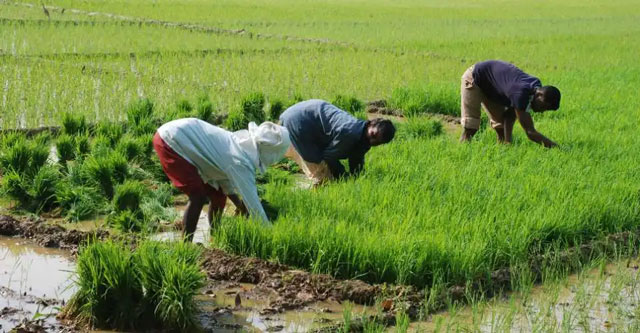
Under the arrangement, agricultural plots owned by the Comunidade are periodically auctioned to local farmers for cultivation. Revenue generated from the process helps maintain community-owned assets such as agricultural lands, hills, ponds and waterways.
The system also supports local livelihoods through the allocation of ponds and lakes to fishermen and the annual leasing of hillocks with cashew and mango plantations to farmers.
Comunidades are ancient collectively owned land institutions governed under the Code of Comunidades of Goa, 1961. These bodies manage agricultural lands and natural resources on behalf of village communities and are regarded as a cornerstone of Goa's traditional rural economy.
However, increasing commercial interest in Goa's land has triggered a series of disputes. Real estate developers and large infrastructure projects are increasingly targeting Comunidade lands, prompting resistance from local residents and environmental groups.
One of the latest flashpoints is in Karapur village in North Goa, where residents are protesting against a luxury township project proposed by the House of Abhinandan Lodha. Villagers have alleged illegal land transactions, destruction of fertile agricultural fields and potential depletion of local groundwater resources.
The protests have included public demonstrations, road blockades and growing tensions within the village administration.
Another controversy has emerged in Tivim, where the MIT Group of Institutions is developing a World Peace University project on a large tract of land that includes a hilltop area.
Environmental activist Xencor Polgi alleged that authorities were facilitating the takeover of extensive Comunidade lands in the name of development. He claimed that previous mining activities had already damaged local ecosystems and disrupted natural water sources.
Activists argue that the pressure on community lands has increased following the introduction of the Goa Regularization of Grant/Allotment of Encroached Comunidade Land Rules, 2025.
According to Jack Mascarenhas, president of the advocacy group Goyche Fudle Pilge Khatir (For Future Generations of Goa), the legislation effectively legitimises decades of encroachments while weakening the authority of traditional village institutions.
Mascarenhas and fellow activist John Vaz have filed a public interest litigation petition before the Goa bench of the Bombay High Court seeking to strike down the law.
The petition contends that the legislation is unconstitutional and requests the court to prevent authorities from processing, approving or regularising encroachments on Comunidade lands under the amended provisions.
Activists maintain that Comunidade lands were historically treated as inalienable community assets that could neither be sold nor permanently transferred to private entities. They argue that the new law opens the door to irreversible loss of village lands and natural resources.
According to environmental groups, Goa's 223 Comunidades collectively own nearly 70 per cent of the state's land, making them a major target for commercial interests.
Former bureaucrat and activist Elvis Gomes said the system pre-dates Portuguese rule and was merely codified by colonial authorities in the 16th century.
He alleged that successive governments after Goa's integration into India had allowed encroachments on community lands and that recent policies were further eroding the traditional framework.
As legal challenges continue, villagers and activists say the battle is not merely about land ownership but about preserving Goa's ecological balance, agricultural heritage and community-based governance system for future generations.