Daijiworld Media Network – Panaji
Panaji, Jun 24: Draft heritage bylaws for centrally protected monuments at Old Goa have been completed and approved by the National Monuments Authority (NMA), the Bombay High Court at Goa was informed during a hearing.
The submission was made in compliance with a court direction issued on May 6 in connection with a petition concerning construction activities in the vicinity of the historic Old Goa church complex.
Counsel appearing before the court stated that the bylaws, prepared under Section 20E of the Ancient Monuments and Archaeological Sites and Remains (AMASR) Act, 1958, as amended in 2010, must now be placed before both Houses of Parliament.
The court was informed that the process has already been initiated and efforts are underway to table the bylaws during the next session of Parliament.
The petition, filed by Glean Cabral and another petitioner, raises concerns over permissions granted for construction within prohibited and regulated zones surrounding centrally protected monuments. In Goa, such permissions are issued by the Chief Town Planner (Planning), who functions as the competent authority.
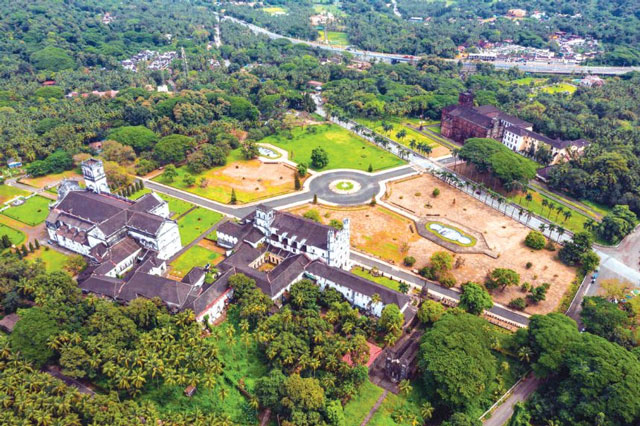
The dispute relates to the Old Goa church complex, where 14 monuments enjoy central protection status.
According to the petitioners, construction permissions within prohibited and regulated areas can be granted only as an exception under the proviso to Section 20D(7) of the AMASR Act. The provision allows such permissions, with approval from the National Monuments Authority, only until heritage bylaws are finalised and officially published.
The petitioners contended that the bylaws were originally required to be prepared by 2016. Although the deadline was later extended until 2021, no further extension was notified thereafter.
Earlier, the High Court had expressed concern over construction activities in the heritage precincts of the Old Goa church complex, observing that permissions continued to be granted despite the absence of approved heritage bylaws.
The court had also noted that several structures had either already been constructed or were likely to come up based on such permissions, raising concerns about the preservation of the heritage site.
The matter remains under consideration before the court.