Daijiworld Media Network – New Delhi
New Delhi, Sep 3: The Supreme Court on Thursday ruled that the Bar Council of India (BCI) has no statutory authority to regulate the conduct of law students, holding that disciplinary action against students falls within the jurisdiction of their educational institutions.
A bench comprising Chief Justice Surya Kant and Justices Joymalya Bagchi and V Mohana passed the order while hearing a matter arising from the controversy involving students of Hyderabad’s NALSAR University of Law and their objections to the proposed participation of the Chief Justice in the university’s convocation.
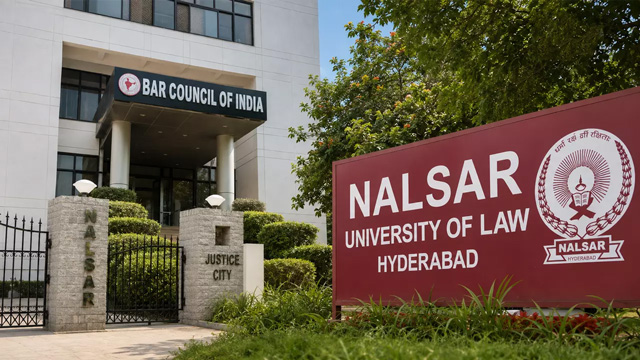
The court set aside two notifications issued by the BCI in connection with the controversy, even though both had been withdrawn within hours of being issued following widespread criticism.
The bench made it clear that the BCI’s statutory regulatory powers apply to persons who have entered the legal profession as advocates and cannot be extended to students who have not yet entered that framework.
The court observed that any action against law students for their conduct must be considered by the educational institution concerned in accordance with its rules and regulations.
The controversy began on August 14 when the BCI directed state bar councils not to enrol NALSAR’s 2026 graduates as advocates until further orders over allegations concerning a campaign opposing CJI Surya Kant’s proposed participation as chief guest at the university’s convocation.
The BCI’s intervention had drawn strong criticism, including from the Chief Justice himself. When the matter was mentioned before the Supreme Court, CJI Surya Kant had questioned the BCI’s authority to intervene in the issue and said the matter concerned a dialogue between the students and him.
The Supreme Court’s latest ruling settles the question of the BCI’s statutory authority over the conduct of law students before they become advocates.